
 1 month ago
50
1 month ago
50
Dear subscriber,
Hi everyone, hope this finds you well. Indonesia’s tech ecosystem continues to evolve, with fresh leadership changes, strategic exits, and growing momentum around AI and digital infrastructure. Companies such as Microsoft, DOKU, AtlasGo, Wuling, and Grab are highlighting how collaboration and technological adoption are shaping the next phase of growth. At the same time, renewed activity in the capital markets and grassroots digital initiatives point to a broader sense of optimism across industries. As always, we’ve rounded up the key developments and trends worth keeping an eye on this week.
Thanks for reading RISE by DailySocial!

For most founders, a productive day isn’t measured by how much gets done, but by how much room is left to think strategically. That room is usually the first thing to disappear—lost to the routine work of coordination, follow-ups, and managing information flowing in from every channel. 1-click OpenClaw from Hostinger offers a different way to handle it: a personal AI agent that deploys in around 60 seconds, with no API configuration or technical setup, and runs 24/7 in the background—even when you’re offline. The real shift isn’t efficiency. It’s getting the thinking space back, and a simpler question to answer: where to redirect the focus that’s been freed up. Deploy yours here!
Thanks for reading RISE by DailySocial!
Stay ahead,
DailySocial Team
IDX Gets a New Captain
Indonesia’s financial regulator OJK has approved a new seven-member board of directors for the Indonesia Stock Exchange for the 2026-2030 term. Jeffrey Hendrik, who has been serving as interim president director since February, is now officially confirmed in the role, bringing over two decades of brokerage experience from Phintraco Sekuritas. The incoming board has pledged to continue capital market reforms with a sharp focus on transparency, governance, and deepening market liquidity from both supply and demand sides. With the new leadership taking office after the June 29 AGM, momentum in Indonesia’s capital markets looks set to accelerate.P2P Lending’s Reality Check
Two of Indonesia’s fintech lending pioneers, Akseleran and AwanTunai, are navigating significant headwinds as the P2P sector faces a post-growth reckoning. Retail lenders at Akseleran are raising concerns over slow loan recoveries, while AwanTunai has begun winding down part of its unsecured SME lending business. The developments highlight the credit risk and operational challenges that come with scaling fintech lending without robust risk infrastructure. These growing pains, however, are pushing the industry toward more sustainable and compliant business models that will strengthen the ecosystem long-term.DOKU’s Investor Exit Signals Maturity
Global fintech investor Apis Partners has exited its stake in Indonesian B2B payments company DOKU, nearly five years after making an initial $32 million investment in 2021. The exit marks a natural lifecycle milestone for one of Indonesia’s most established digital payment infrastructure players, which continues to be backed by Emtek Group with Ant International in its ecosystem. DOKU has long been a backbone for enterprise payment processing across the country, serving thousands of merchants and businesses. The successful investor exit reinforces confidence that Indonesian digital payment companies can deliver returns, even as the competitive landscape intensifies.Microsoft Bets Big on Indonesia’s AI Future
Microsoft has appointed Gunawan Susanto as its new Country General Manager for Indonesia, signaling renewed leadership commitment at a pivotal moment for AI adoption. Gunawan brings over two decades of experience, having previously led Amazon Web Services and IBM Indonesia, and will now steer Microsoft’s strategy across public sector, enterprise, startups, and SMEs. The appointment comes on the back of Microsoft’s $1.7 billion four-year commitment to cloud and AI infrastructure in Indonesia, with more than 2 million people already joining the Microsoft Elevate program. This leadership move sets the stage for deeper AI integration across the Indonesian economy.AtlasGo Enters Automotive Tech Sector with New Leadership
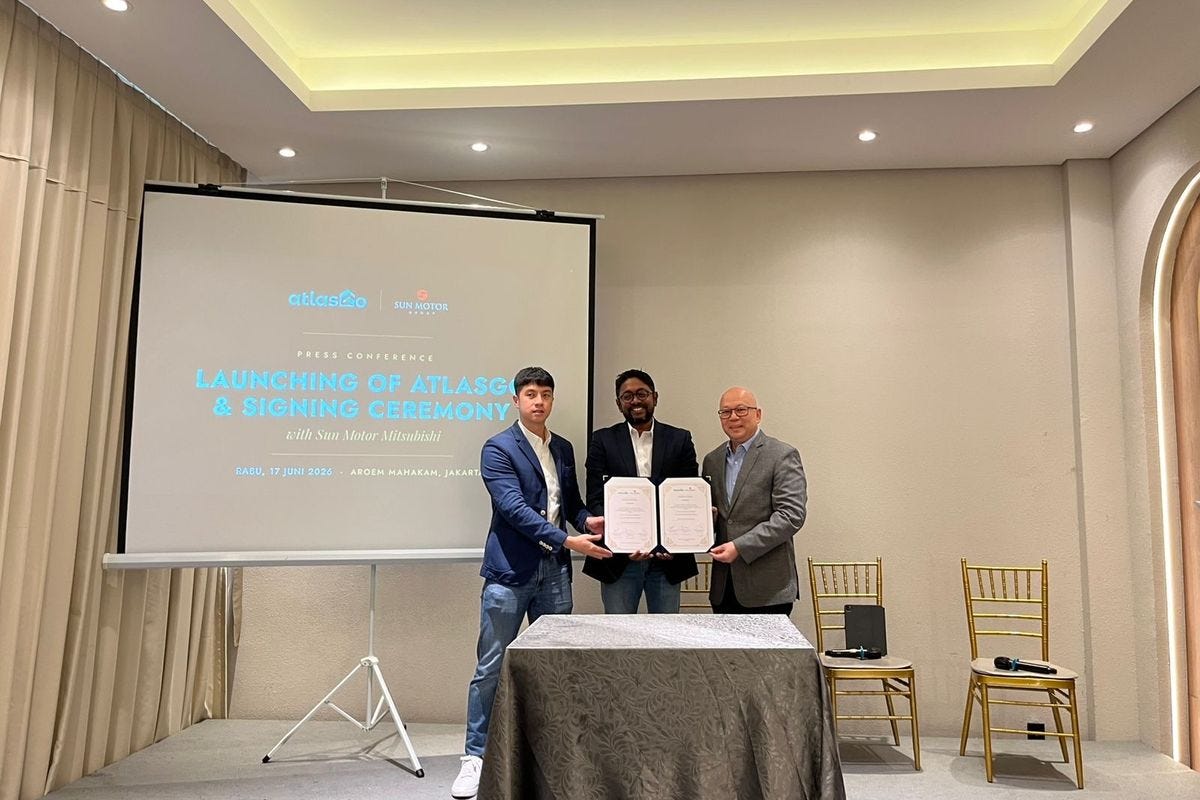
Local artificial intelligence startup AtlasGo is expanding its market footprint beyond real estate by appointing former Rumah123 CEO Wasudewan as its new Co-Founder and CEO. The platform simultaneously secured a strategic partnership with Sun Motor Mitsubishi to implement DealerView, an AI-powered sales intelligence tool that tracks consumer behavior data before buyers step into a showroom. This move directly tackles the classic marketing gap where local enterprises spend heavily on customer acquisition but lack the conversion data to measure true digital ROI. It highlights a massive digital transformation phase across the Indonesian automotive landscape as over 50 new car models and electric vehicles hit the local market in just one year.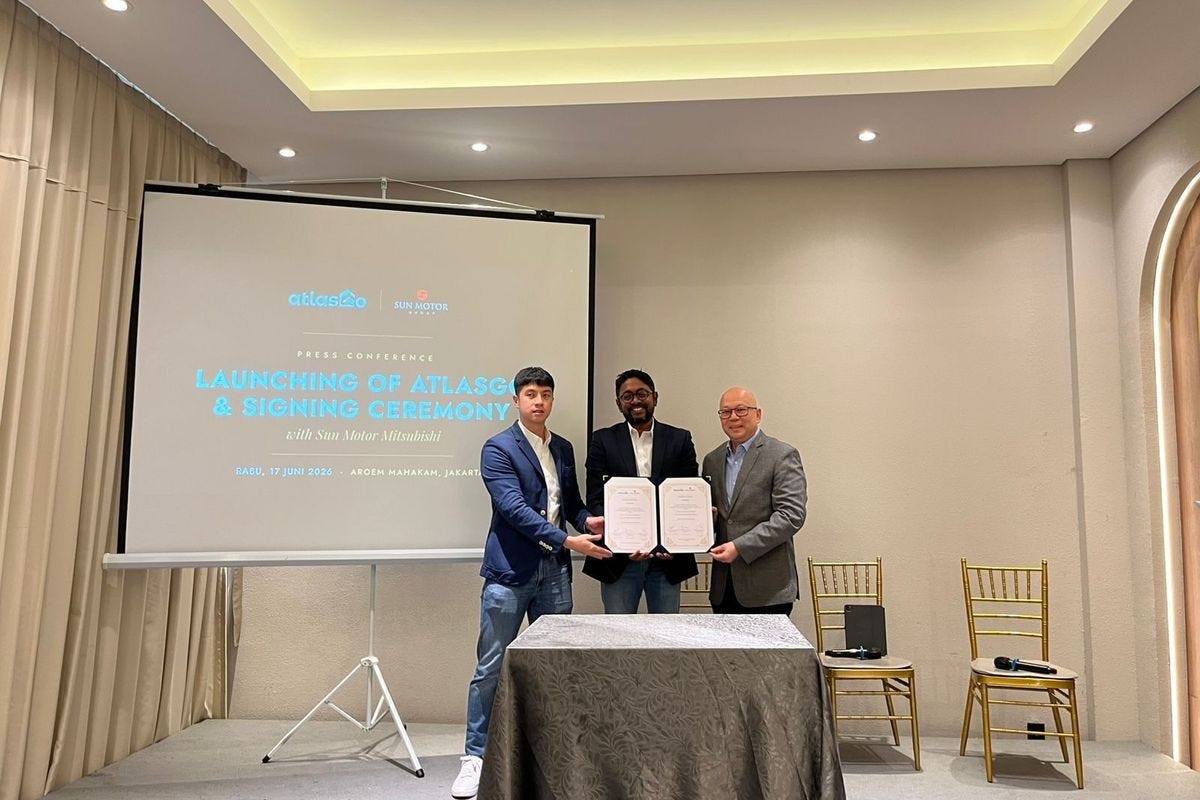
Wuling Powers Grab’s Green Fleet
Wuling Motors and Grab Indonesia have deepened their partnership through the supply of New BinguoEV Lite units to GrabRentals, expanding the ride-hailing giant’s electric vehicle fleet. Grab already operates more than 14,000 EVs across its Indonesia ecosystem, with an ambitious target to triple that number by end of 2026. The BinguoEV Lite, equipped with a 31.9 kWh LFP battery and 333 km range, offers driver-partners an accessible option through an affordable rental scheme. This collaboration is a strong signal that the convergence of tech platforms and EV manufacturers is actively reshaping urban mobility.
Data Centres: Southeast Asia’s New Gold Rush
The AI infrastructure boom is channeling significant capital into Southeast Asia, with two major developments pointing to a bright outlook. Galaxy DC has secured $250 million in an initial strategic financing round to build gigawatt-scale AI data centre campuses across the region using Singapore as its hub, while KKR-backed STT GDC continues its aggressive expansion with its Jakarta campus growing through four new facilities. The appetite for hyperscale AI and cloud computing infrastructure in the region is clearly far from satisfied. Indonesia, with its growing digital economy and improving power infrastructure, is cementing its position as one of the most compelling data centre destinations in Asia.Indonesia Moves Up the Medical Aesthetics Value Chain
Indonesian private equity firm Adivira Capital has acquired a Singapore-based medical aesthetics group, pairing it with its existing stake in Indonesian aesthetics clinic operator Euromedica to build an integrated regional skincare platform. The move reflects growing investor confidence in medical aesthetics, a sector seeing robust demand growth across Southeast Asia’s expanding middle class. By combining clinical assets across two markets, Adivira is positioning itself to capture both the premium aesthetics segment and the rising demand for evidence-based skincare. It is a compelling bet on health-conscious consumer trends that are reshaping how people spend on personal wellness across the region.An IPO Pipeline That’s Coming Back to Life
Indonesia’s public market is showing encouraging signs of recovery with a cluster of listings gaining momentum this week. F&B manufacturer Niramas Utama (Inaco brand) is targeting up to $22 million through its IDX debut under ticker JELI on July 7, after tripling net profit to Rp39 billion in 2025, while Prodia-backed diagnostics maker Proline seeks up to $3.5 million ahead of a July 9 listing under ticker PDRL on the back of 26.8% revenue growth. On the international front, Merdeka Gold Resources is executing a $306.3 million secondary listing in Hong Kong, backed by Glencore, Trafigura, and Mercuria, underscoring global appetite for Indonesia’s world-class mineral assets including the 7.4 million-ounce Pani Gold Project. Together, these listings signal that the drought in Indonesia’s capital markets may finally be breaking.Koperasi Goes Digital
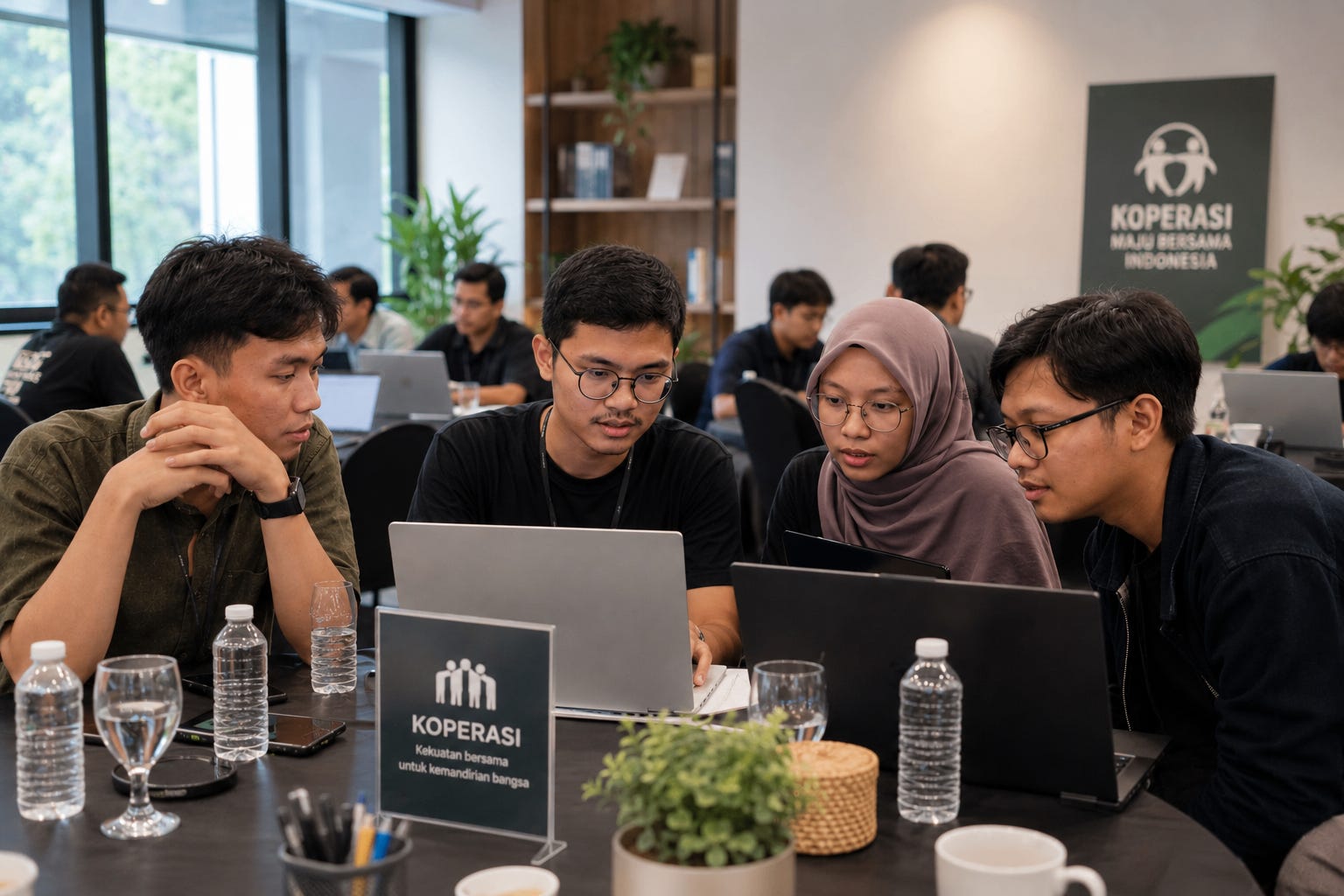
The Ministry of Cooperatives has launched the Hackathon Digital Cooperative Expo 2026, a national competition inviting tech talent, startups, and academics to build digital solutions for Indonesia’s cooperative ecosystem. With over 83,000 village cooperatives already organized under the Koperasi Desa Merah Putih national program and membership exceeding 2 million people, the scale of the opportunity is substantial. The hackathon targets four strategic pillars: increasing cooperative business volume, boosting community participation, unlocking village economic potential, and driving digital literacy among Gen Z and Alpha. It is an exciting signal that government-backed digital transformation is now reaching all the way down to Indonesia’s grassroots economic institutions.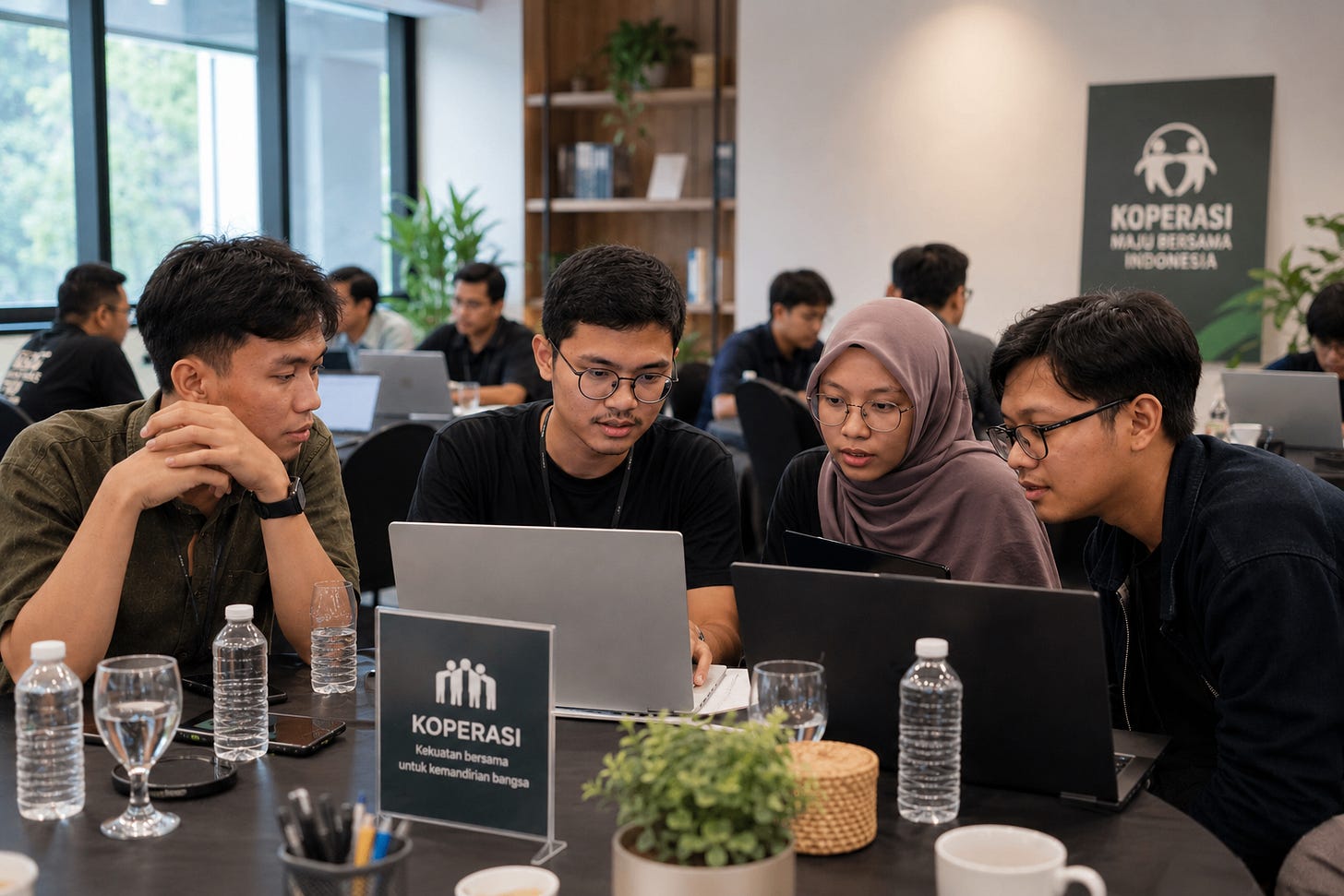
The shift towards “coopetition” and strategic maturity is defining the next phase of the APAC fintech landscape. According to the 2026 Money20/20 whitepaper, the region has transitioned past pure experimentation into scaling large-scale digital solutions. Deeper collaboration between traditional banks and agile fintechs is no longer just a trend but a commercial imperative. Regulators are also evolving from strict gatekeepers into proactive partners, paving the way for sustainable industry growth, robust cyber-resilience, and advanced infrastructure across the region.
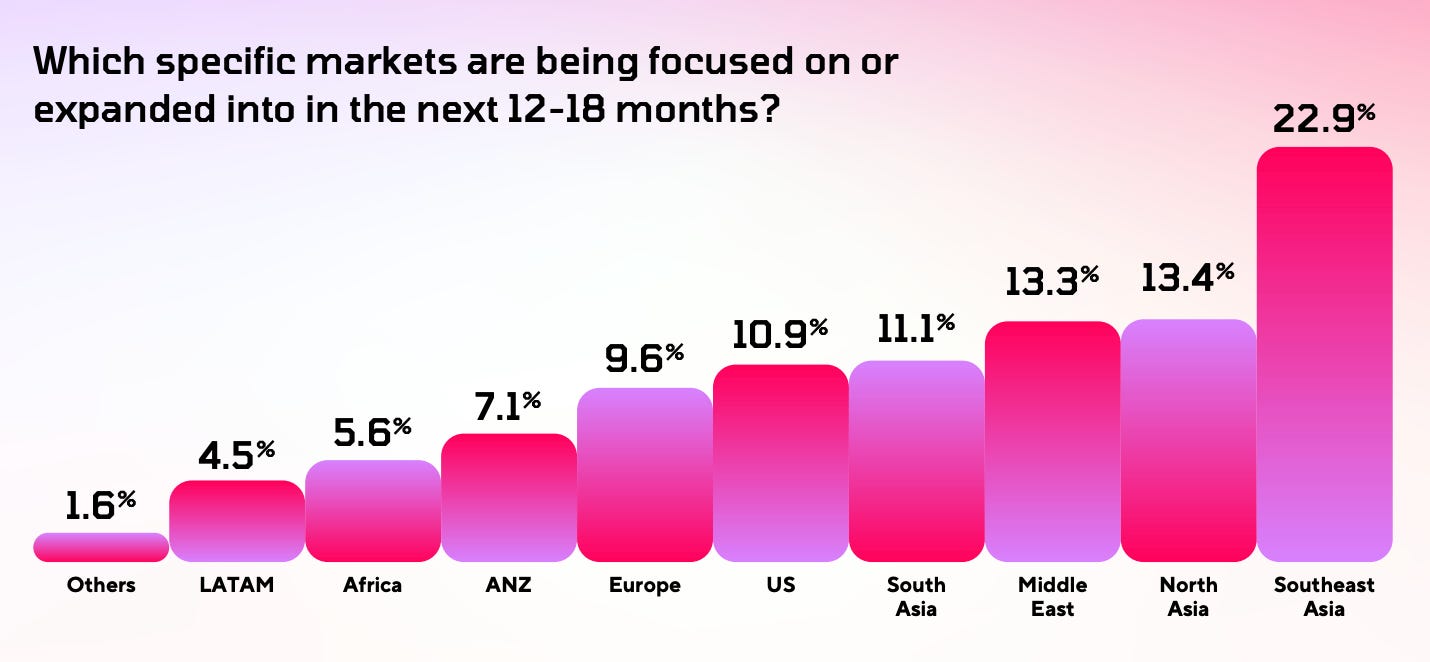
Key data highlights AI, digital lending, and embedded finance as the primary drivers of this transformation. Survey results reveal that Artificial Intelligence (AI) has the most significant impact on fintech today, with 61.2% of organizations already adopting it to scale operations. Blockchain and distributed ledger technology (DLT) closely follow at 17.9%, with stablecoins taking center stage for practical B2B and cross-border use cases. Furthermore, there is an overwhelming consensus regarding financial inclusion; 90.6% of firms prioritize social good (pp. 2-3), while 72.9% agree that hyper-localized fintech solutions tailored to small and medium enterprises (SMEs) are the key to unlocking regional economic growth.
For the Indonesian market, this report highlights massive growth opportunities aligned with current national digital strategies. Indonesia is explicitly recognized for its pioneering strides, such as Bank Indonesia granting its first open banking license and local players like Bank Jago integrating cultural traditions like “arisan” into high-tech UI modes. With Southeast Asia housing an estimated 166 million unbanked adults, capturing this untapped market could boost regional GDP by up to 14%. Moving forward, Indonesian financial institutions can capitalize on these insights by heavily investing in grassroots digital literacy and balancing fraud prevention with seamless customer experiences to capture long-term consumer trust.

























:strip_icc():format(jpeg):watermark(kly-media-production/assets/images/watermarks/bola/watermark-color-landscape-new.png,1125,20,0)/kly-media-production/medias/5215189/original/094397100_1746795977-20250509AA_Persija_Jakarta_vs_Bali_United-8.jpg)

:strip_icc():format(jpeg)/kly-media-production/medias/5414734/original/095074300_1763347294-Ivar_Jenner_Timnas_U-22-4.jpg)



:strip_icc():format(jpeg)/kly-media-production/medias/5324850/original/079448900_1755868038-Elkan-Baggott.jpg)

:strip_icc():format(jpeg)/kly-media-production/medias/9156133/original/040188200_1783083936-1000458903.jpg)

:strip_icc():format(jpeg):watermark(kly-media-production/assets/images/watermarks/bola/watermark-color-landscape-new.png,1125,20,0)/kly-media-production/medias/5399789/original/029438800_1762005007-Dewa_United_vs_Shan_United-8.jpg)




:strip_icc():format(jpeg)/kly-media-production/medias/5555686/original/070273400_1776181577-adan.jpg)
:strip_icc():format(jpeg):watermark(kly-media-production/assets/images/watermarks/bola/watermark-color-landscape-new.png,1125,20,0)/kly-media-production/medias/7845662/original/097107000_1780668046-20260605BL_Timnas_Indonesia_Vs_Oman_FIFA_Matchday_2026-03.jpg.jpeg)
:strip_icc():format(jpeg)/kly-media-production/medias/9247475/original/055010800_1783141031-ATK_BOLA_TIMNAS_MATCHDAY_2026_GENERAL.jpg)