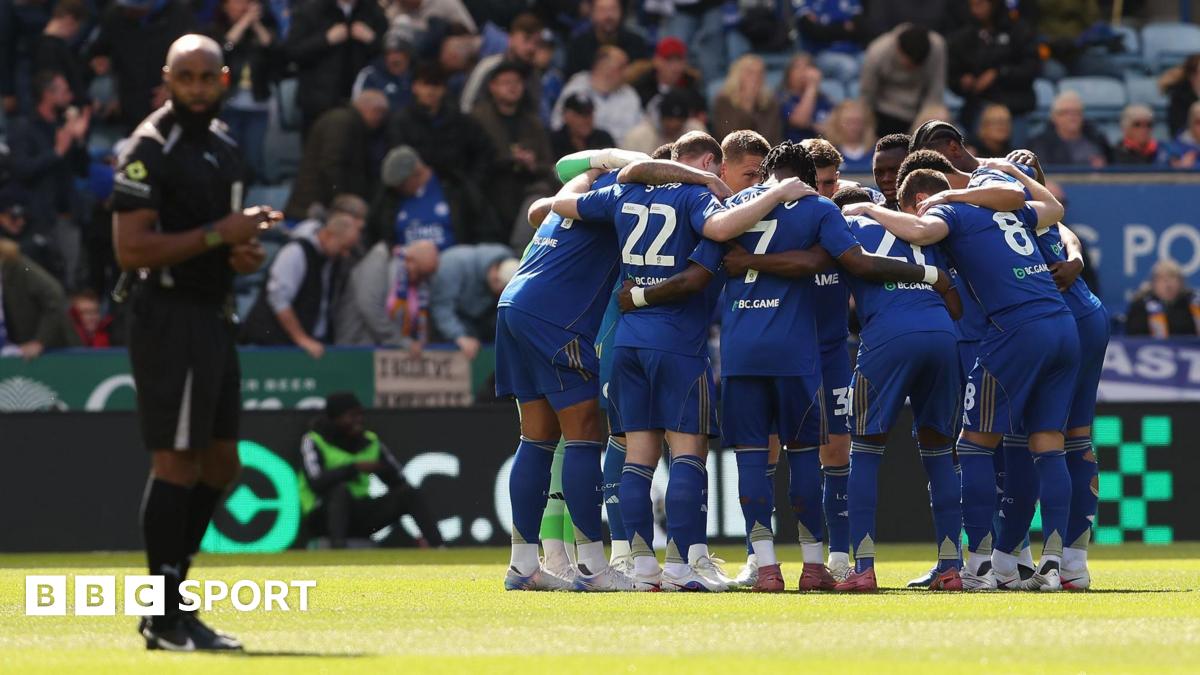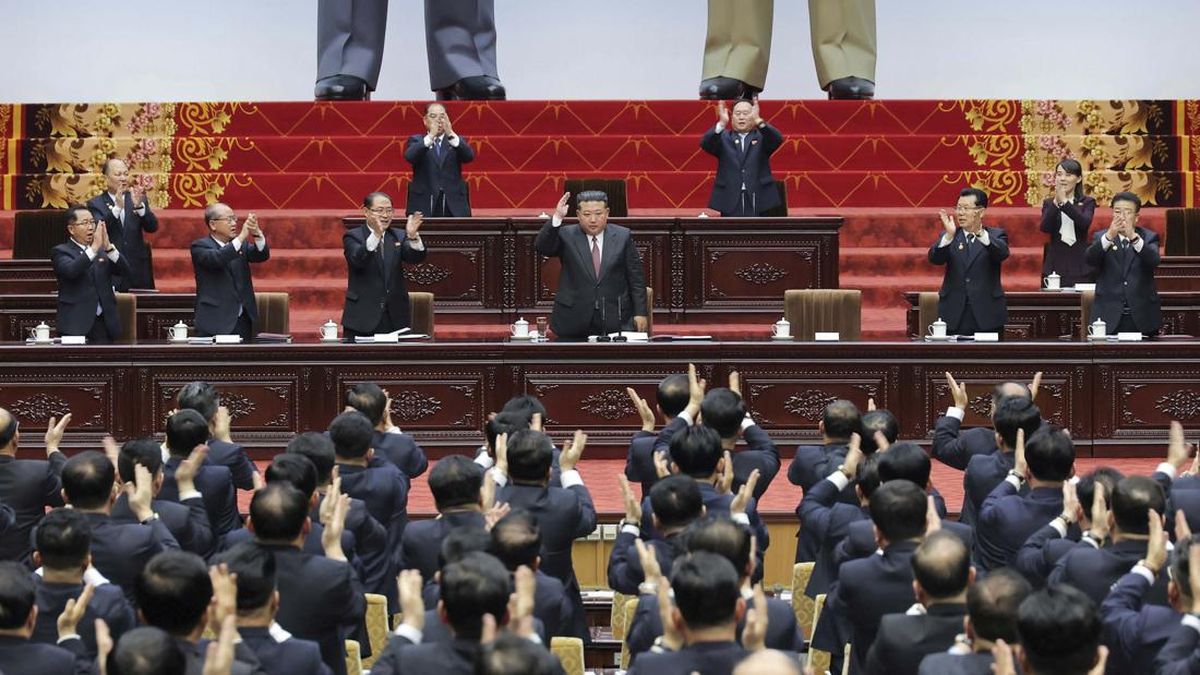

Set-plays have been in the headlines again this week, especially at corners with masses of players from both sides surrounding the six-yard box and the goalkeeper.
I watched and rewatched many of these incidents myself and witnessed defending players holding attacking players around the waist, and not even looking at the delivery. That's a foul, and a penalty should be awarded.
In fact, we're at the stage now where referees have to clamp down and give either penalties, or free-kicks to the defending team, if they see an offence.
Howard Webb, where are you, and what instructions are you actually giving out to your officials as the head of Professional Games Match Officials Limited (PGMOL)?
We are seeing players penalised outside the box for incidents that are nowhere near as blatant as the chaos we are witnessing in the six-yard box, and around the goalkeeper - so why is a foul in one part of the pitch, not a foul in this scenario?
One of the things this chaos has led to is teams not defending properly now. Why should they, when they can get away with not even watching the cross come in?
As a manager, I spent as much time working on defending crosses coming into our box as I did on us attacking crosses off set plays.
We are killing the art of good defending by allowing this to continue, and let me also say that set-play coaches should be ashamed at allowing their team to defend in this way.
I've heard many pundits come up with different suggestions of how we can stop this nonsense. Well, how about common sense? That tells me that if the referees start dishing out penalties and red cards, then it would not carry on.
Why I felt for Farke over his red card
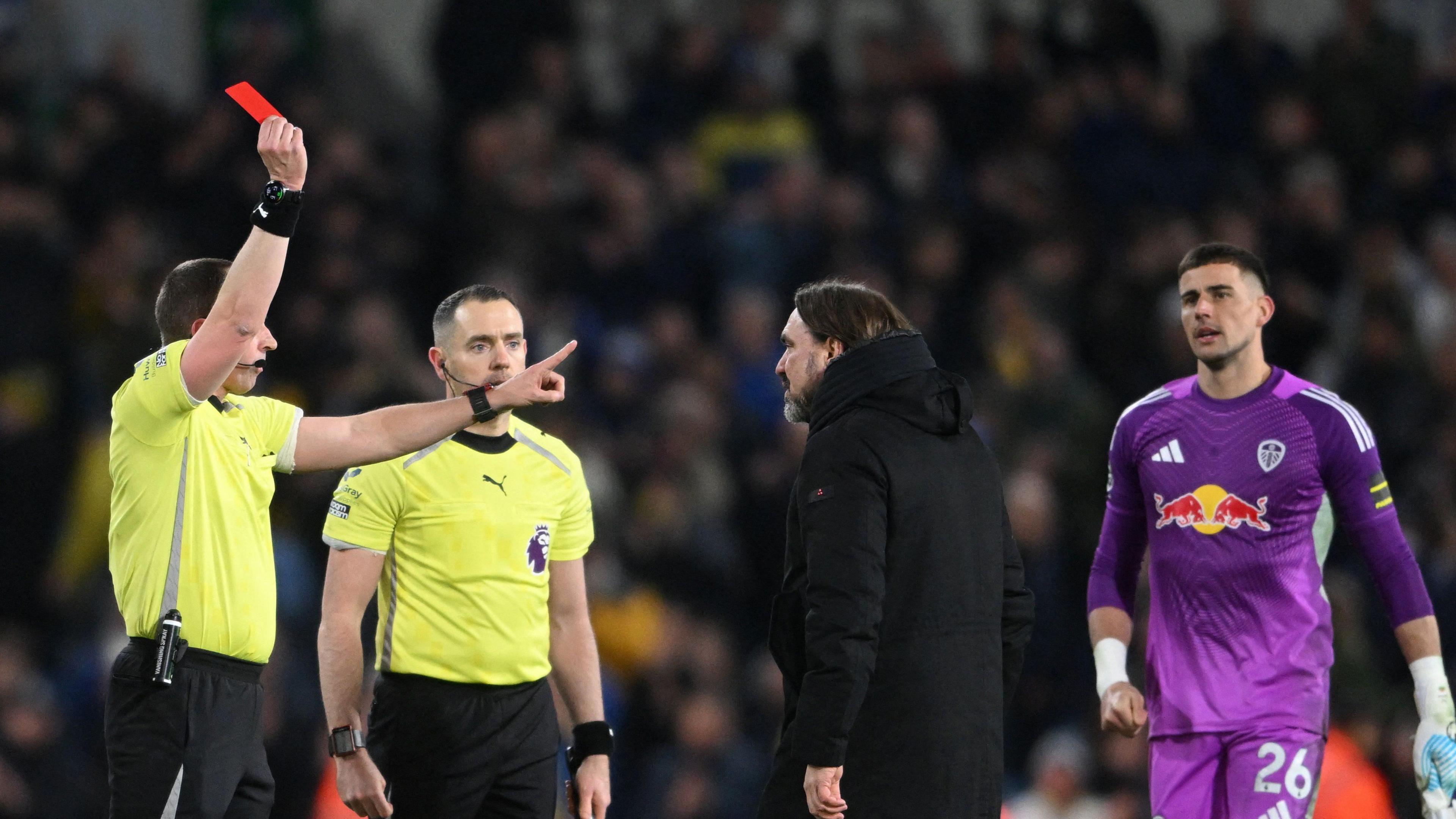 Image source, Reuters
Daniel Farke was shown a red card by referee Peter Bankes after full-time
The chaos at corners was not the only thing I've watched this week when I've thought something has to change.
Leeds boss Daniel Farke was sent off for questioning the referee's time-keeping at the end of Leeds' 1-0 defeat by Manchester City.
I felt for him - for years and years, the managers of the so-called smaller Premier League clubs have had an inward belief that the top teams tend to get more decisions go their way than they do. I certainly did!
The time being added on at the end of a game is getting longer and longer, with both teams often complaining about the rationale of the referee's decision.
I have always believed that every game should have a time-keeper working in unison with the referee, and showing everyone in the stadium, including supporters, when the clock is stopped and restarted.
Rugby union uses this method, and it works so well. With stoppages, like the types we see in football when injured goalkeepers go down, or for substitutions and any other significant breaks, we can see the clock stop and start by the referee's signal, but the time-keeper is overseeing it all.
Referees have enough on their plates today dealing with the ghosts of Stockley Park and their video assistant referees (VAR), let alone guessing what time to add on.
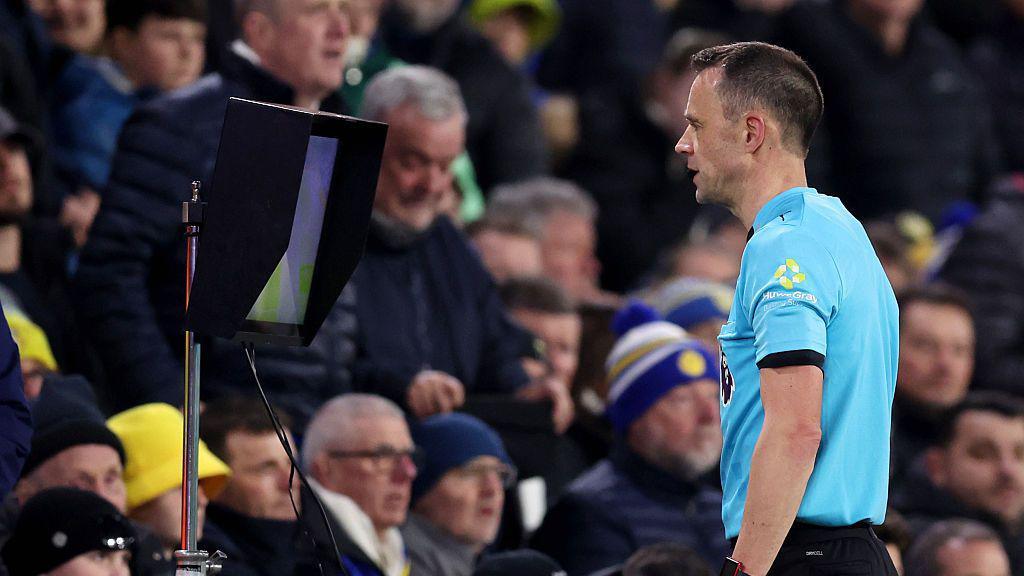 Image source, Getty Images
The video assistant referee (VAR) was introduced to the Premier League in 2019
Talking of Stockley Park, I can honestly say that place is having the biggest impact on professional football in my lifetime - and not, I may add, in a positive way.
Every week, I watch games with an open mouth, wondering how so-called refereeing experts can get so many decisions wrong.
The nature of football means subjective decision making is always going to be contested - handballs, penalties and what is or isn't a booking. It's impossible to agree on everything, and we have to understand that.
But red cards have to be given a more rigid framework for referees to work with, which would hopefully bring more consistency to decisions.
The laws around everything I have mentioned above in this column are far too ambiguous at the moment, and I think we have to remember what VAR was originally brought in for.
It was meant to protect and correct major or blatant wrong decisions - things like Thierry Henry's handball versus the Republic of Ireland, Diego Maradona's handball against England and Frank Lampard's goal which crossed the line but wasn't given against Germany, in the 2010 World Cup.
Incidents like that are examples of the kind of major wrong decisions which we can all agree on.
Unfortunately, VAR has become a monster, which is driving supporters away from the game, and things are getting worse - it seems to be involved more and more now, in every game I watch, and it is still not getting things right.
What grates with a lot of people in the game is that they are not asked what they think the problem is with VAR.
There are two other governing bodies of people in English football - the League Managers Association and the Professional Footballers' Association - with members who have actually played the game or are currently playing and managing in it.
Even if the referees don't want either of them involved in operating VAR, have they been asked how VAR could be improved - because they are the people it is affecting, not just the supporters.
If not, why not?
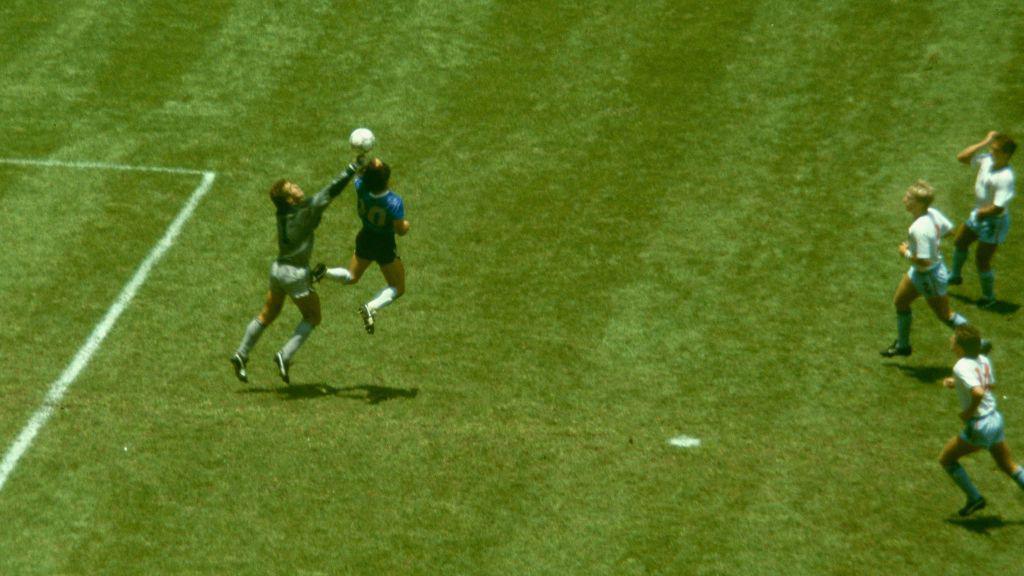 Image source, Getty Images
Argentina's Diego Maradona outjumps Peter Shilton to score against England with his 'Hand of God' goal in the 1986 World Cup quarter-final
Let the game breathe properly again
Can I just emphasise that fans come to watch a football match and see their team's players, not to be swamped by referees or VAR stopping games at every contentious moment.
These people must realise the effect they are having on our game. In my day as a player, referees were still judged on their performance but it was seen as a positive if they were not noticed.
Now, they are always noticed - but for all the wrong reasons.
Maybe it is time to remind our officials that the game is for the people, and not for them - referees should only be a part of the product when the game is going on, because people do not turn up to watch them.
Please, let's get back to that, rather than being bombarded with the details of every decision. It is spoiling the game.
I appreciate that Howard Webb and his merry band of men have an enormously difficult job, but VAR has not helped them - instead, it has just exposed how inept they can be even with technology to help.
So, let's get back to accepting that all referees make mistakes during games.
We should still correct them if they are major ones, but now it's time to let the game breathe properly again - let's give it back to the supporters, without this monster in the room ruining it any further.
Tony Pulis was speaking to BBC Sport's Chris Bevan.