 2 months ago
16
2 months ago
16
Dears subscriber,
Indonesia is moving fast this week—across food resilience, digital innovation, and cybersecurity. IFRF 2025 brought together agri leaders to accelerate collaboration, backed by insights from the new report Food Resilience Through Innovation and Technology. Major tech moves are also underway with StarHub–NeutraDC advancing quantum-safe connectivity, and PLN Indonesia Power–Huawei launching AI-powered power-plant digitalization. Meanwhile, Indonesia’s AI scene shows big room for growth, and OJK reports lost to online-transaction fraud, highlighting the urgency for stronger digital safeguards. The opportunities are wide open—and now is the time to build boldly.
Stay ahead,
DailySocial Team
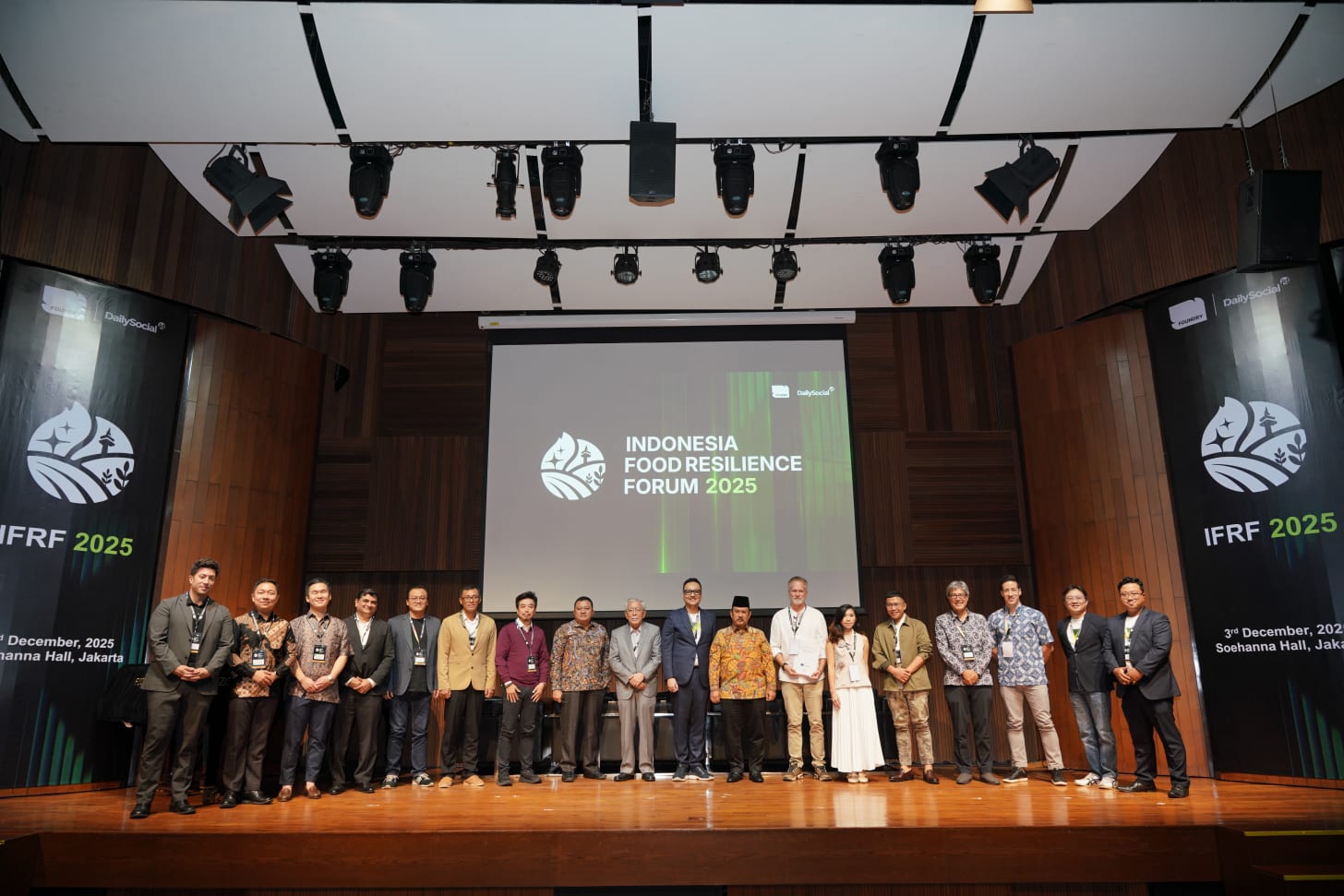
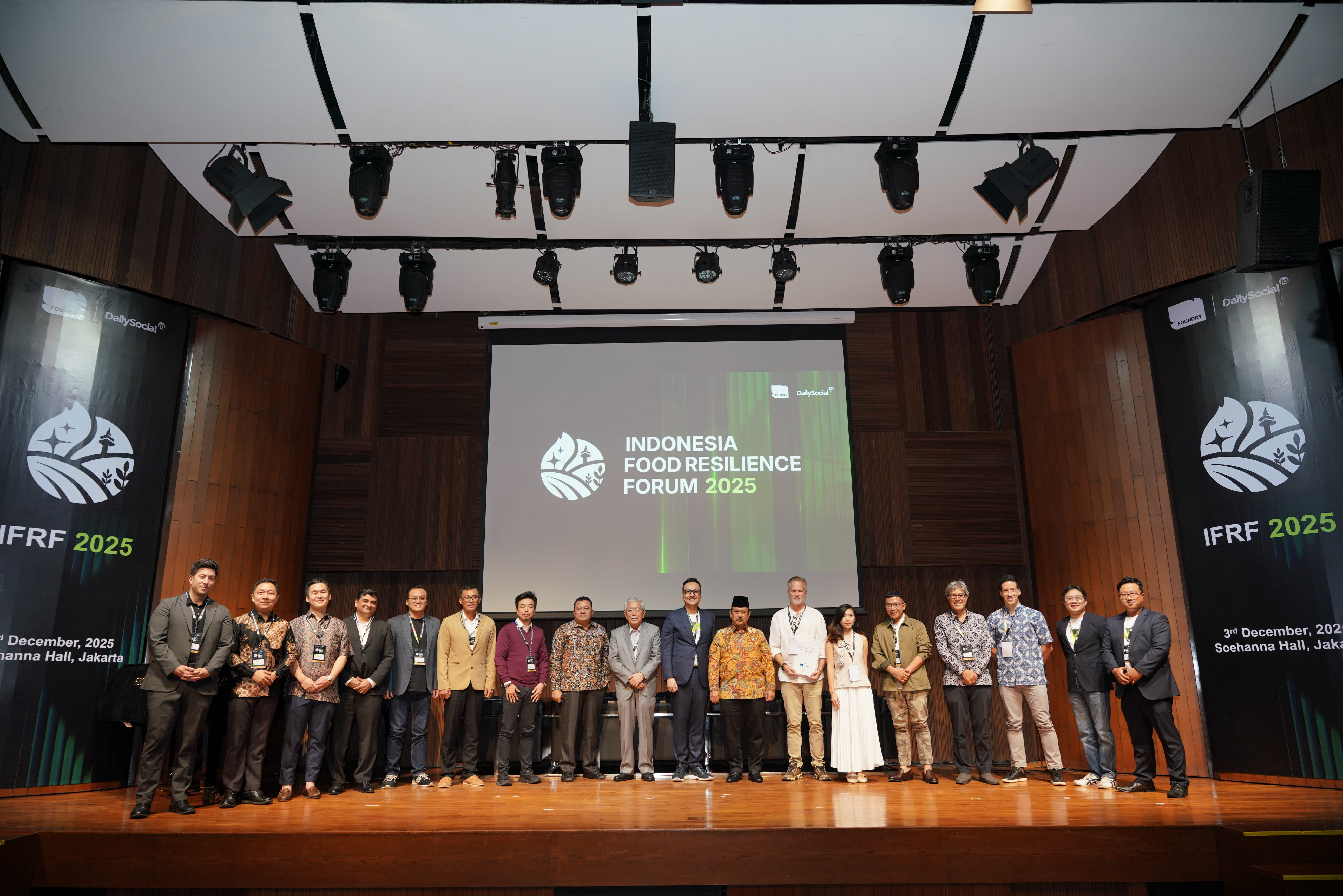
IFRF 2025: Uniting Innovation and Collaboration for Indonesia’s Food Future — The IFRF 2025 forum brought together more than 200 policymakers, investors, agritech founders, and industry leaders to align strategies for strengthening Indonesia’s national food resilience. The event underscored that food security is not only a sustainability goal but also a major economic opportunity. The forum underlined findings from the report “Food Resilience through Innovation & Technology” — including Indonesia’s agricultural-food sector value (USD 43.9 billion in 2024, projected to reach USD 56.3 billion by 2033), and the untapped potential in circular-economy models for food waste.
StarHub partners NeutraDC for Quantum-Safe Connectivity in Southeast Asia — StarHub and NeutraDC (the data-center arm of Telkom Indonesia) signed an MoU to deploy quantum-safe encryption and low-latency inter-data-center connectivity. The partnership aims to provide enterprises in Indonesia and Singapore with secure, high-performance data exchange via next-generation network infrastructure — future-proofing against evolving cyber threats.
PLN Indonesia Power and Huawei kick off a new era of AI-driven power-plant digitalization — PLN IP signed a Joint Study Agreement with Huawei to apply artificial intelligence for “smart inspection,” digital HSSE (Health, Safety, Security, Environment), cybersecurity, and IT integration at power plants. The pilot project at PLTU Banten 3 Lontar is designed to improve operational efficiency, safety, and support Indonesia’s energy transition — marking a major step towards “intelligent,” more sustainable electricity generation.
Indonesia Has Only 25 AI Startups vs. 300+ in Singapore — Opportunity Ahead
Recent insights into the regional technology landscape reveal a significant gap between Indonesia’s and Singapore’s AI startup ecosystems: Indonesia currently hosts around 25 AI startups, while Singapore has surpassed 300. Industry leaders argue that this gap is not a weakness but a vast growth opportunity, especially given Indonesia’s large population, expanding digital economy, and increasing institutional interest in AI adoption across agriculture, finance, logistics, and public services.
OJK Reports IDR 111 Trillion in Losses from Transaction-Fraud Scams
The Indonesian Financial Services Authority (OJK) issued a warning regarding the sharp rise in e-commerce and digital-payment fraud, particularly transaction-manipulation scams, which have generated estimated losses of IDR 111 trillion nationwide. These tactics often exploit social-engineering techniques to deceive consumers into unauthorized payments. OJK urged banks, e-commerce platforms, and fintech players to strengthen cybersecurity and user-education programs, highlighting the urgent need for robust fraud-prevention frameworks to protect the public in an increasingly digital economy.
Strengthening Indonesia’s Food Future Through Innovation & Collaboration
Indonesia is entering a pivotal moment in building long-term food resilience, driven by urgent structural challenges such as fragmented smallholder systems, climate pressure, and supply chain inefficiencies. The report “Food Resilience Through Innovation and Technology: Pathways for a Nourished Future – Case Study: Indonesia” highlights Indonesia’s critical journey toward long-term food sovereignty. To secure food sovereignty and economic stability, the nation must modernize agricultural production through technology, data, and sustainable practices. The government’s national vision under Indonesia Emas 2045 prioritizes reducing import dependency, strengthening farmer welfare, and enhancing infrastructure for irrigation, logistics, and research.
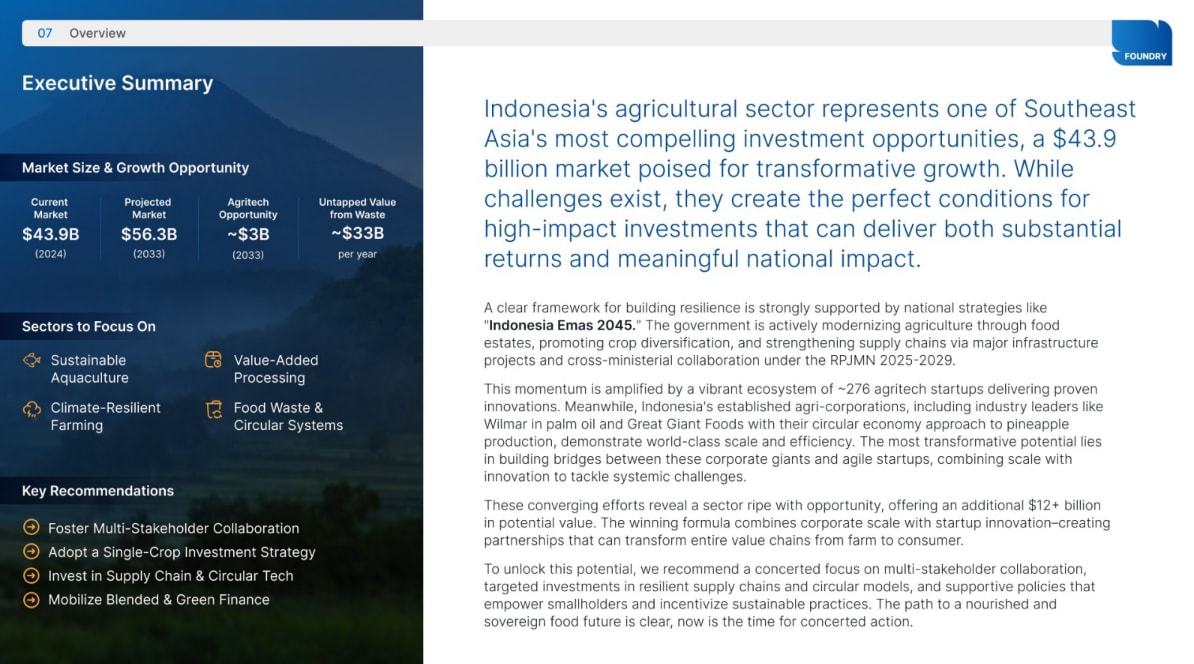
The momentum is strengthened by an expanding agritech ecosystem of more than 276 startups delivering real impact—from precision farming and agri-fintech to circular economy models and AI-driven analytics. Case studies such as Agrari’s yield-doubling smart farming, Eratani’s 99% loan repayment success through integrated agri-finance, and Kreasi Pangan’s logistics-first supply chain transformation demonstrate scalable pathways for improving productivity and farmer income. Corporations like Great Giant Foods also showcase world-class circular production models that convert waste into value.
With the agricultural sector valued at USD 43.9B today and projected to reach USD 56.3B by 2033, Indonesia presents one of Southeast Asia’s strongest investment theses. Unlocking an additional USD 12B+ in value will require stronger collaboration between government, startups, financiers, and industry, alongside targeted investment in sustainable aquaculture, climate-resilient crops, value-added processing, and circular logistics. The pathway to national resilience is clear—coordinated innovation and capital deployment can transform Indonesia’s agriculture into a modern, competitive engine of growth.