
 1 month ago
43
1 month ago
43
Dear subscriber,
This week's edition captures Indonesia sitting at another meaningful turning point across capital, infrastructure, and policy. On the deal side, Kargo is pushing deeper into commercial EVs with AC Ventures and Cathay Venture, ADM Capital is anchoring a fresh climate finance fund in Indonesian agriculture, Barito Renewables is unlocking bilateral bank capital for two flagship geothermal projects, and Fore Coffee keeps proving the premium F&B thesis at scale.
On the policy front, DPR has officially passed the PFII law paving the way for Indonesia's first international financial centre, while Danantara is preparing the soft launch of its integrated commodity export system. Add Bukalapak's transition into an execution-first chapter and a fresh Tracxn read confirming Southeast Asia's tech funding has staged its strongest comeback since 2022.
AWS Summit Jakarta 2026: Eksplorasi Inovasi AI dan Cloud untuk Akselerasi Bisnis
AWS Summit kembali hadir di Jakarta pada 6 Agustus mendatang. Mengusung tema optimalisasi AI melalui modernisasi infrastruktur, acara ini menawarkan pengalaman mendalam melalui demo interaktif, studi kasus dari para pengguna, serta sesi jaringan bisnis dengan pengembang dan pakar AWS.
Tak kurang dari 40 sesi akan mengisi rangkaian acara, dengan pembicara utama (keynote speakers) Anthony Amni dan Nandini Ramani. Seluruh agenda dapat diikuti tanpa biaya (gratis) di The Ritz-Carlton Jakarta, Pacific Place.
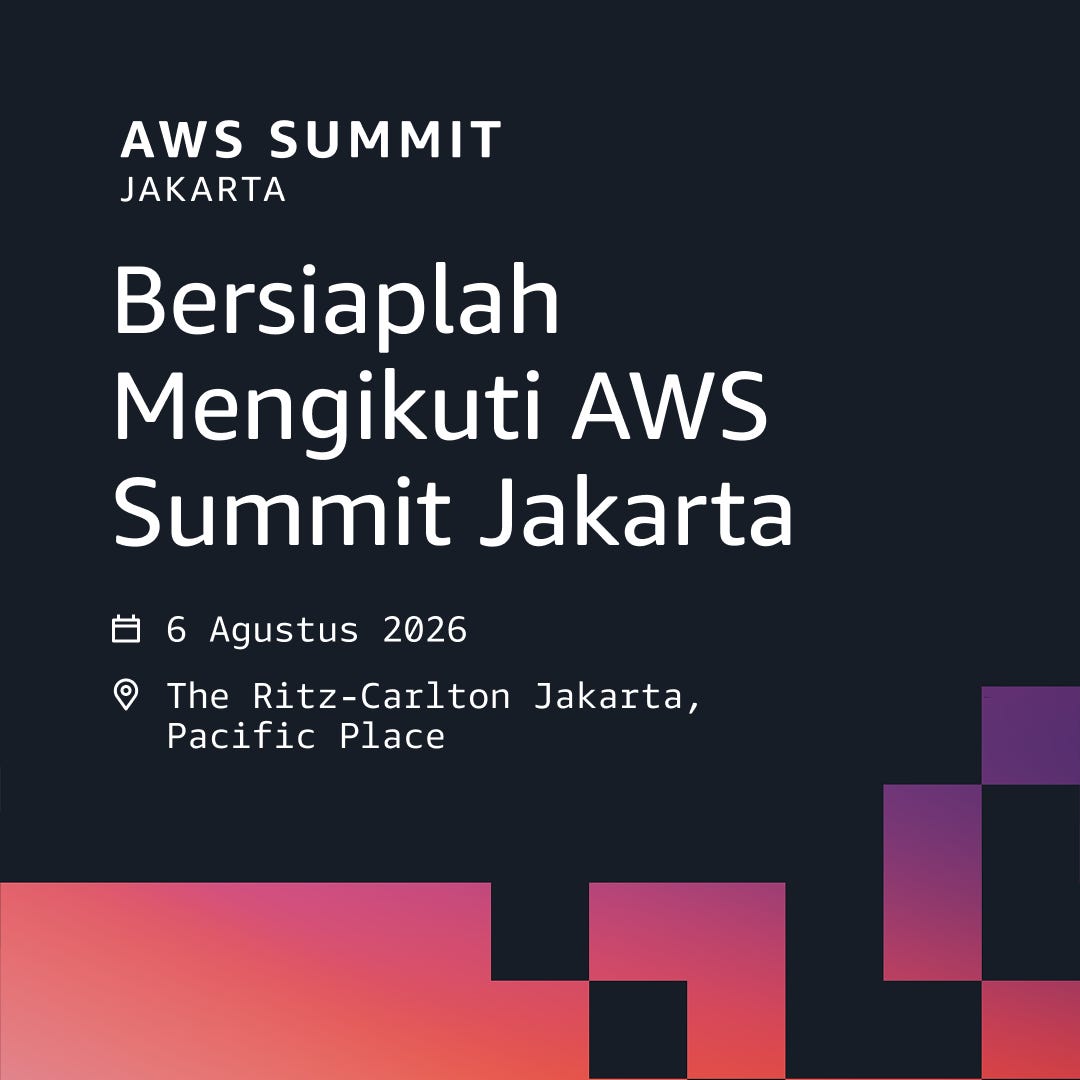
Manfaatkan momentum ini untuk mengakselerasi transformasi digital bisnis Anda. Daftar di sini.
Thanks for reading RISE by DailySocial!
Stay ahead,
DailySocial Team
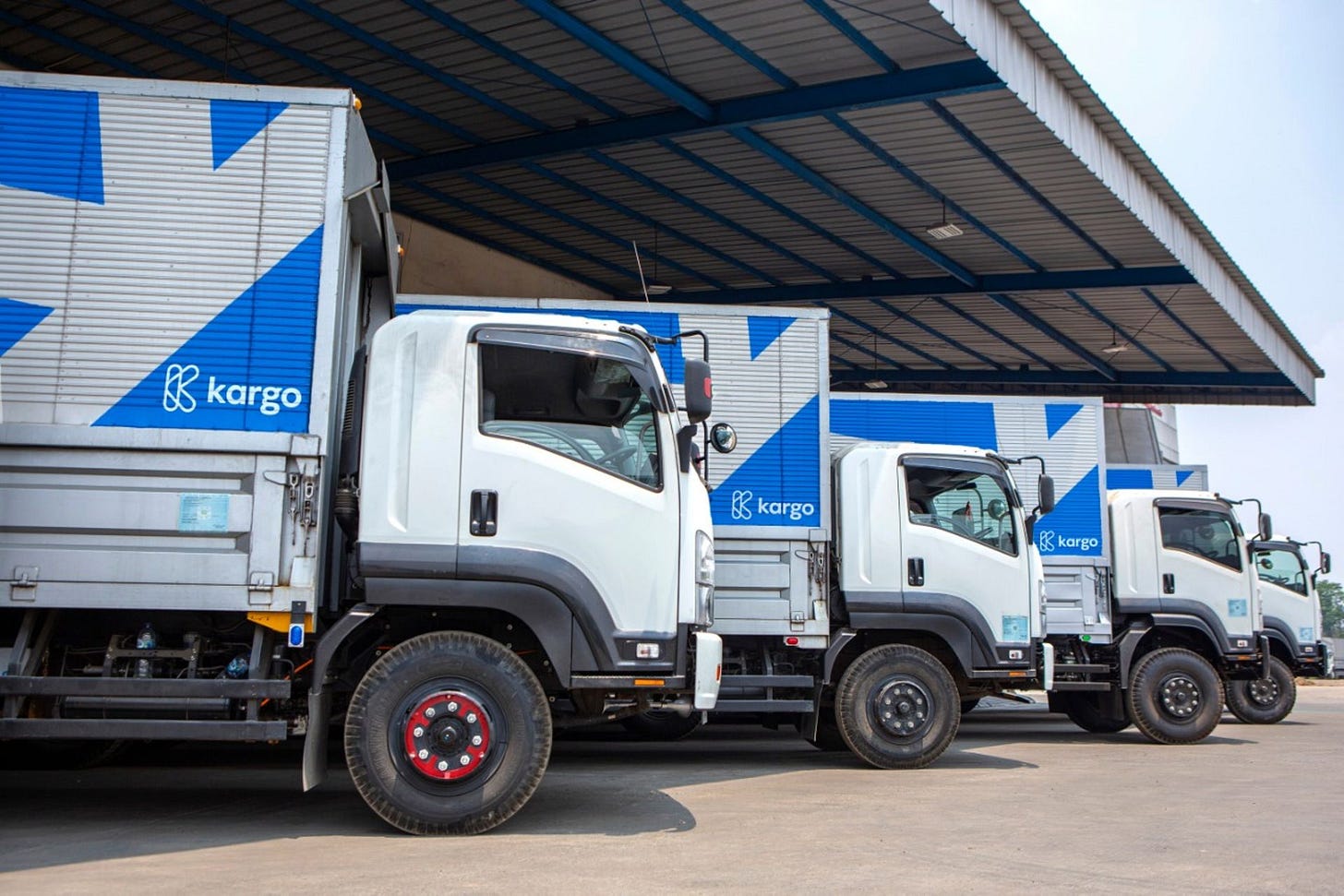
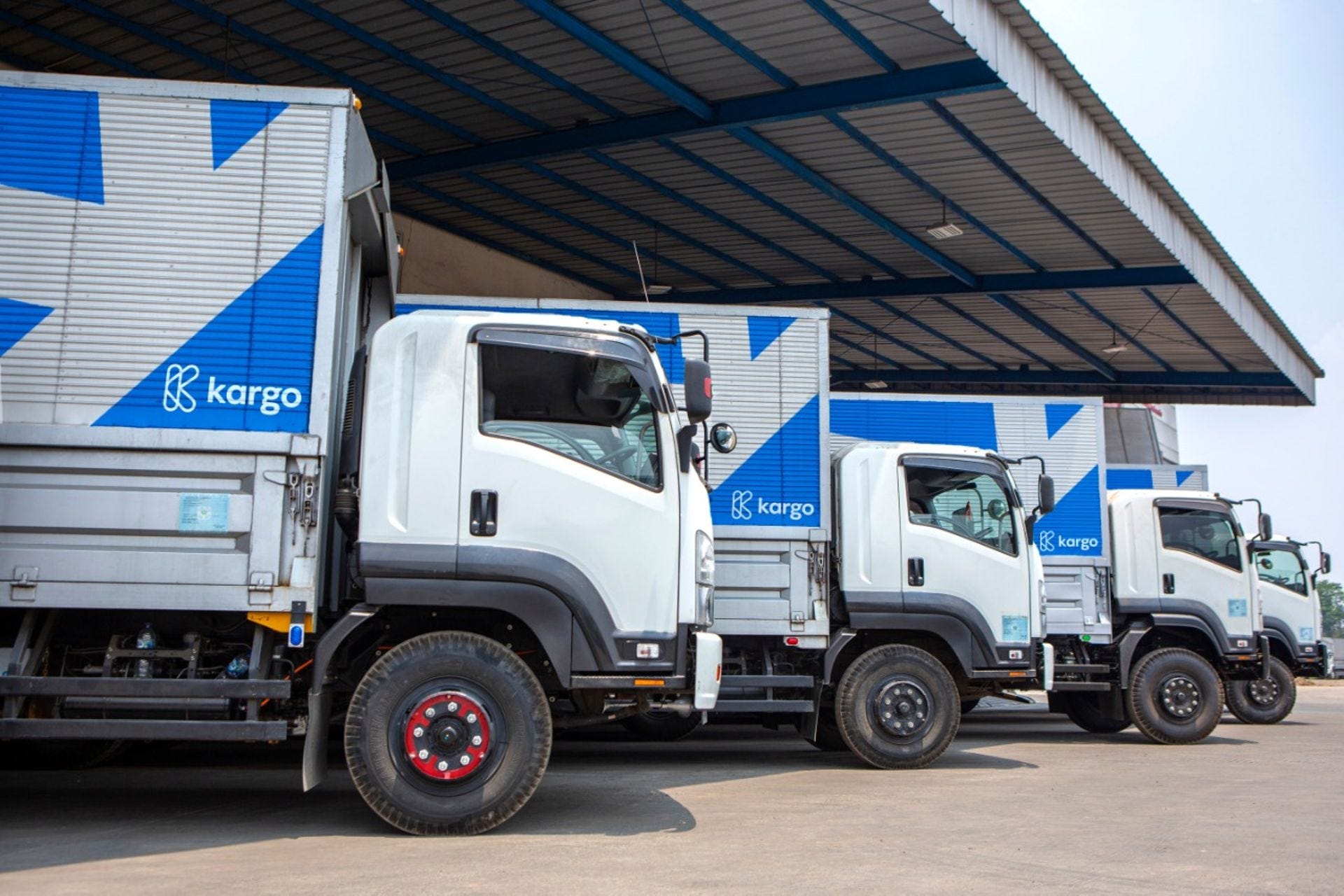
Kargo Fuels Its EV Push with a Fresh Round from AC Ventures and Cathay Venture. Indonesian logistics tech player Kargo has closed a bridge round of up to $7 million through a convertible note, led by existing backer AC Ventures with Taiwan-based Cathay Venture, the VC arm of Cathay Financial Holding, joining as a new investor. The capital will accelerate Kargo’s expansion into commercial EV fleet offerings, deepening its move from digital freight matching into owning more of the electric logistics value chain. As Indonesia doubles down on its fleet electrification agenda, well-positioned digital logistics platforms like Kargo are increasingly viewed as strategic infrastructure rather than pure marketplace plays.
ADM Capital Closes $48M Blended Finance Fund for Indonesia’s Climate-Smart Agriculture. ADM Capital has announced the final close of the ADM Capital Asia Climate-smart Landscapes Fund at $48 million, its first impact fund dedicated to climate-smart land-use financing in Indonesia. The blended structure brought in $8 million from the Australian Government via Sarona Asset Management, matched by $8.65 million from Australian foundations including the Minderoo Foundation, Paul Ramsay Foundation, and LEEAF Trust, plus a 50% asset-level guarantee from the US International Development Finance Corporation. ACLF will provide long-term credit to SMEs across agricultural supply chains, with carried interest linked to defined environmental and social performance targets.
Monk’s Hill Sharpens Its SEA Strategy from a Consolidated Singapore Base. Singapore VC Monk’s Hill Ventures, best known as one of Ninja Van’s largest backers, is undergoing a strategic reset that includes consolidating its investment team into a single Singapore base and closing its Indonesia office. The shift reflects a broader trend among established SEA venture managers of doubling down on operational focus and portfolio quality rather than geographic sprawl. Monk’s Hill’s Indonesian portfolio and pipeline remain active, now managed from a leaner regional hub. For Indonesian founders, the takeaway is that the region’s top-tier VCs are becoming more thesis-driven and disciplined, which typically translates to sharper diligence and higher-conviction backing where it lands.
Barito Renewables Locks in a $300M Geothermal Loan from Bangkok Bank. Star Energy Group, the Singapore-based geothermal arm of listed Barito Renewables Energy, has secured a $300 million five-year loan facility from Bangkok Bank to fund two flagship geothermal projects in Indonesia. Roughly $210 million will finance the Suoh Sekincau project in Sumatra across pre-construction and construction phases, while $90 million will flow to the Hamiding project in Maluku. The deal represents about 34% of Barito Renewables’ $883.5 million equity base, making it a material transaction under Indonesian capital market rules, and demonstrates strong bilateral banking confidence in Indonesian geothermal. With Indonesia holding roughly 40% of the world’s geothermal reserves and aggressively scaling clean energy, this is a template for how regional bank capital will underwrite the country’s next-decade energy transition.
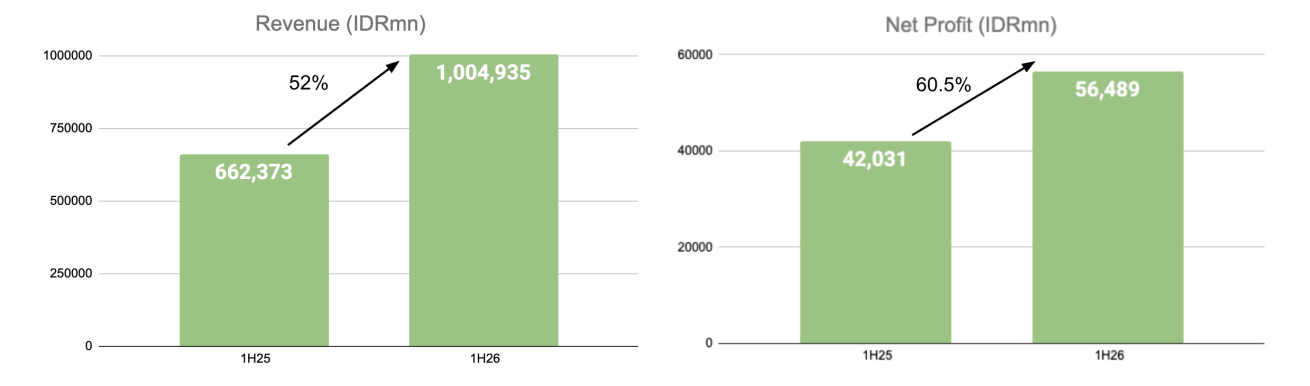
Fore Coffee Crosses IDR 1 Trillion in H1 Revenue as Profit Jumps 34%. Indonesia’s listed premium coffee chain Fore Coffee posted first-half 2026 revenue of IDR 1 trillion (~$56 million), up 51.7% year-on-year, with net profit rising 34.4% to IDR 56.5 billion. EBITDA jumped 65.4% to IDR 216 billion, and EBITDA margin expanded to 21.5% from 19.7% a year earlier, showing real operating leverage even as expansion spend accelerated. The chain now runs 377 outlets in total, including 363 Fore Coffee stores in Indonesia, 10 Fore Donut units, and four Fore Coffee outlets in Singapore, up from 261 stores a year ago. For Indonesia’s premium F&B sector, Fore is fast becoming the clearest proof point that disciplined, tech-enabled consumer brands can scale profitably far beyond the big cities.
Bukalapak Enters the Execution Phase After Fully Deploying Its $1.2B IPO Proceeds. Bukalapak has now fully deployed all IDR 21.33 trillion ($1.2 billion) in net proceeds from its landmark 2021 IPO, completing the five-year capital allocation cycle mandated by IDX for listed companies. The proceeds went primarily to working capital and business growth across the group, and the strategic pivot is now clearly visible in the results: the gaming segment now generates around 88% of revenue at IDR 2.1 trillion in Q1 2026, and the company returned to positive adjusted EBITDA in the same quarter. The next chapter shifts investor focus from allocation to execution, meaning consistent revenue growth, EBITDA expansion, ROIC, and cash conversion. For Indonesia’s tech listing market, Bukalapak’s transition into an execution-first story is a healthy signal that the era of open-ended capital deployment is officially closing.
DPR Passes the PFII Law, Setting Up Indonesia’s First International Financial Centre. Indonesia’s parliament unanimously passed the RUU PFII (Pusat Finansial Internasional Indonesia) law on July 21, 2026, establishing the framework for the country’s first international financial centre modelled on hubs like Dubai. The 10-chapter, 73-article law is built around three pillars, capital access and investment, innovation and governance, and national competitiveness, backed by an unusually strong incentive package that includes a 50-year tax holiday, exemptions on foreign-sourced income, selective VAT exemptions, plus a dedicated PFII court and arbitration body for dispute resolution. Finance Minister Purbaya Yudhi Sadewa framed the law as complementing rather than replacing Indonesia’s domestic financial system with a world-class integrated ecosystem.
Danantara Preps a September Soft Launch of Its Integrated Commodity Export System. Danantara Indonesia’s dedicated strategic commodity export unit, PT Danantara Sumberdaya Indonesia (DSI), will begin processing export data through a new national integrated governance system in September 2026, marking the soft launch of a landmark commodity governance reform. Set up on June 1, DSI channels exports of strategic commodities including coal, palm oil, and ferroalloys through a centralised government-backed agency, targeting the long-standing challenges of under-invoicing and transfer pricing that have historically cost the state significant revenue. DSI has described the approach as phased and market-oriented, positioning itself as an intermediary and governance facilitator focused on transparency and continuity for exporters and international buyers.
SEA tech funding has staged a striking comeback in the first half of 2026, and the numbers are the clearest signal yet that the region’s venture cycle is turning back up. According to Tracxn’s SEA Tech H1 2026 report, total funding reached $7.4 billion, a 122% jump over H2 2025 and a 130% jump over H1 2025, making it the strongest half-year the region has seen since the 2022 peak. The rebound is being driven overwhelmingly by a return of large late-stage cheques that had gone missing through the downturn, alongside a concentrated wave of capital into AI and enterprise infrastructure. Read carefully, this is not just a rebound, it is the region’s venture ecosystem maturing into an era of quality over volume. For anyone building, investing, or operating in Southeast Asia, this is a setup worth paying close attention to.
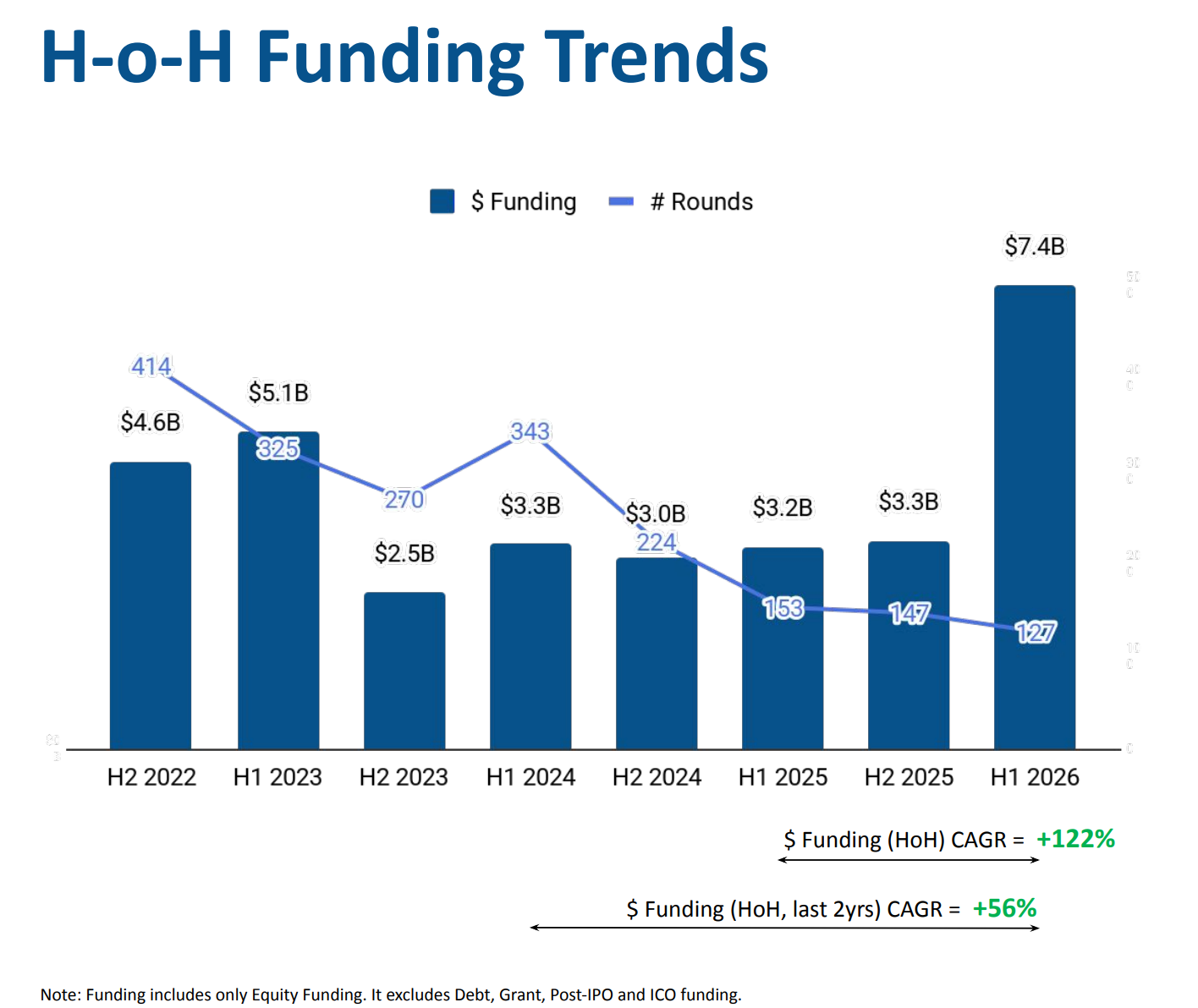
The mechanics behind the surge are strikingly concentrated. Late-stage funding alone hit $6.0 billion in H1 2026, up 200% from H2 2025 and 137% year-on-year, while the region logged 12 mega-rounds above $100 million compared to just 4 in H2 2025. Singapore-based DayOne raised $4.5 billion across two Series C tranches, followed by Supabase at $500 million and Airwallex at $320 million, with Enterprise Infrastructure funding rocketing 503% year-on-year to $5.2 billion and Enterprise Applications up 202% to $2.0 billion. On the exit side, six IPOs including MiniMax, SkyeChip, and JustCo, plus KKR and Singtel’s $5.2 billion take-private of ST Telemedia Global Data Centres, confirm that liquidity is starting to flow again. Singapore captured 94% of all H1 2026 regional funding, with Bangkok, Kuala Lumpur, Taguig, and Jakarta splitting the remaining 6% in a highly concentrated pattern that reflects where the current AI and cloud infrastructure thesis is playing out most acutely.
For Indonesia specifically, Jakarta captured $38.2 million in H1 2026 with names like Jago Coffee, Pluang, and Kitar leading the local tally, alongside Tangerang’s Green Rebel raising $12.5 million. On the surface that looks quiet, but the broader picture matters more: Indonesia already sits at $19.0 billion in cumulative SEA Tech funding to date, second only to Singapore, and Indonesian late-stage cycles have historically followed Singapore’s with a lag of one to two halves. If the current Singapore-led revival plays out as prior cycles did, Indonesia is the natural next beneficiary once regional capital rotates from cross-border AI and enterprise infrastructure back into consumer, fintech, and vertical software plays where Indonesian founders traditionally lead. The setup is genuinely constructive: fresh late-stage capital is now sitting in the region, IPO and M&A pipes are unclogging, and the themes driving Singapore rounds (AI infrastructure, cloud-native tools, digital payments) map directly onto Indonesia’s strongest founder cohorts. H1 2026 is the setup, and Indonesia’s turn in this cycle is where the story likely opens next.