
The FA Cup is still the greatest cup competition in the world and the third round is still a special weekend in the football calendar but, speaking from a manager's perspective, it has become more complicated over the years than it used to be.
The Premier League now overrides the fixture schedule, and I'm afraid the importance of the FA Cup has diminished somewhat because of that, especially when your club's top-flight status and entire financial footing is at stake.
Like most things in life today, money talks and the Premier League without doubt now does most of the talking.
With three European league competitions as well, and the number of games and teams involved there, the FA Cup has fallen even further down the pecking order.
With the number of games now being played, something has to give and it is usually the FA Cup. As a manager, I understood why - even though I grew up in the 1960s and 1970s when it was considered very special by everyone - and this year will be no different.
After a busy festive period and another round of games in midweek this week, the games this weekend will be looked on by the Premier League teams as a chance to rest some of their players, and in some cases all of them!
It's sad to see, even if it could lead to opportunities for smaller clubs to join the band of giantkillers which the competition has become famous for down the years.
I have experienced both sides of the coin. When we were promoted to the Premier League in 2008, Stoke initially struggled and at the turn of the year, when we came to a third-round tie at League One side Hartlepool, I changed practically the whole team.
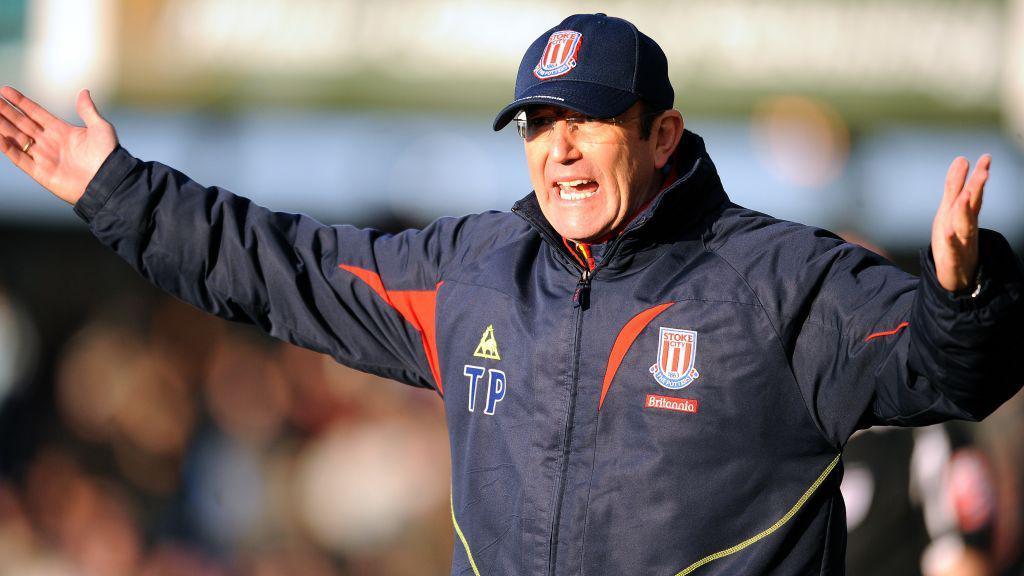 Image source, Getty Images
An FA Cup low, at Victoria Park. Pulis shows his frustration as his Stoke side crash out of the third round in 2009 against League One team Hartlepool, who were 41 places below them
The group needed a rest and I believed the players who had been out of the team would have a point to prove - but we lost 2-0 and I took some criticism from the press for the changes.
I still felt justified for doing what I did. My over-riding objective was to remain a Premier League club because it was imperative for our long-term future, and fortunately we did stay up that year.
Was that cup game, and my team selection, vital in our survival? I am not sure, but when you are a leader you have to make decisions and only later can you assess whether they are the right choices.
It always makes me giggle when I hear some pundits putting the world to rights AFTER the event - if I always got to pick my team after each game, even I think I could get a few of them right.
How a cup run comes together
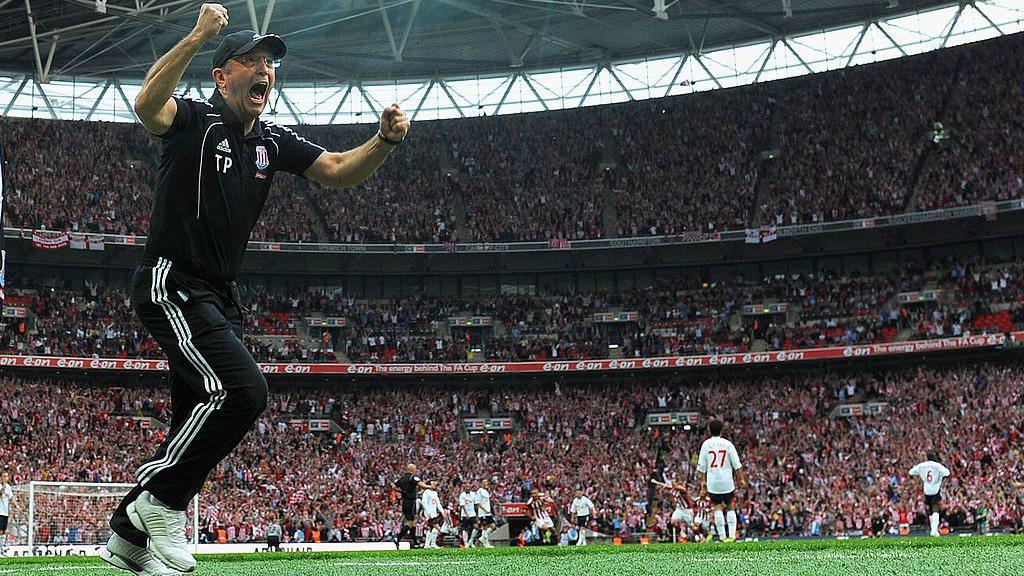 Image source, Getty Images
An FA Cup high, at Wembley. Pulis celebrates his side's fourth goal in their 5-0 win over Bolton in the 2011 semi-final
My view as a manager was that, if you were in charge of a team outside the top six, you could never honestly 'target' a cup run.
They just come along when things align for you - like it did for us with Stoke when we reached the FA Cup final in 2011.
You need good fortune on the pitch, favourable draws in different ways, and also to have a team and squad capable of going deep into the competition. I always felt Stoke would need about three years in the Premier League for that to happen, and I was not far off.
I'd already been a manager for 20 years by then, and that cup run will always be among my favourite memories - Cardiff over two games, Wolves away, Brighton at home then West Ham, Bolton and then Manchester City. Each game has its own story.
In the third round, Cardiff played really well at our ground, but we beat them away in a more comfortable game for us. After that, Wolves away was always going to be difficult but Thomas Sorensen saved a penalty and Huthy (Robert Huth) got our winner.
Our 3-0 win over Brighton in the fifth round looked comfortable but Gus Poyet's side gave us a really good game. Next up were West Ham, who had just beaten us 3-0 in the league at Upton Park, so let me just say that was a tough week for the lads which paid off with a 2-1 win.
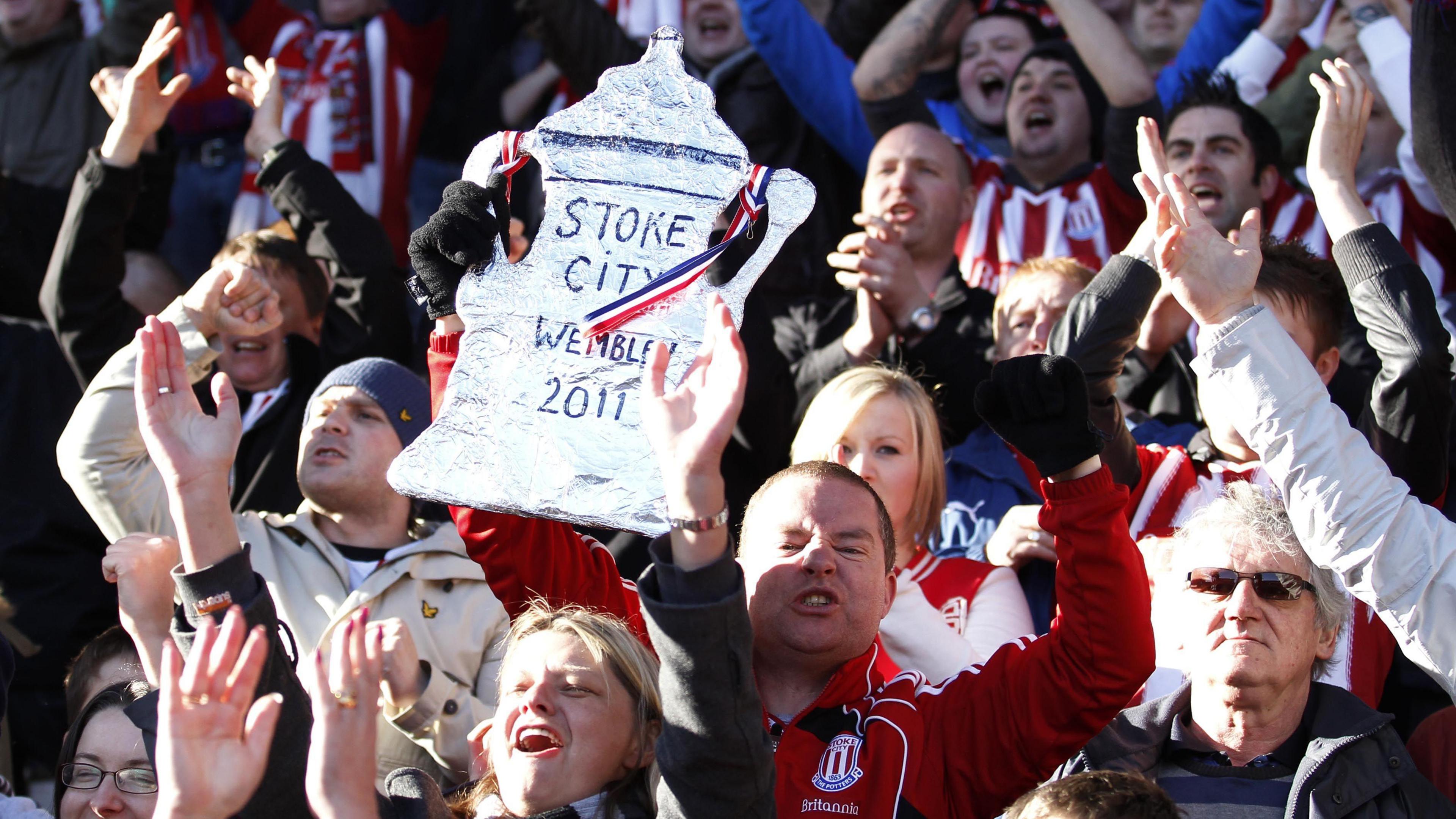 Image source, Rex Features
A tin-foil FA Cup? Of course... Stoke fans celebrate after beating West Ham in 2011 to book their place at Wembley for the FA Cup semi-finals
That took us to Wembley, where we faced Bolton in the semi-finals. My skipper, Ryan Shawcross, came to see me to ask if the lads were getting suits and he was made very aware of the fact that it was not a final, and that they had one more game to go before that happened.
No Stoke fan will ever forget what happened that day. Bolton turned up with suits, and with flowers in their jackets, and that was my team-talk taken care of. After an unbelievable performance where we won 5-0, I mentioned afterwards that those suits must be worth having!
The final against City did not see the result we wished for, but the lads were still fantastic. They were a great group and ultimately they came up just short against a team that would go on to dominate the Premier League for the next decade.
I just have one quick note to add about that time, because I get really annoyed when I see players acting up when they are benched - it gets to me even now.
During that wonderful cup run, Sorensen was my goalkeeper but Asmir Begovic was undoubtedly my number one, and started our league games.
When we reached the final, there were reports about me swapping Sorensen for Begovic, which I never did - but also Asmir never once knocked on my door and asked about Thomas being selected for all of those ties I listed above.
He supported Thomas right through that tournament and showed what a great team player he was. That epitomised the spirit at Stoke, and that kind of togetherness is another ingredient any team will need to make it to Wembley this year too.
History still counts - the FA Cup gives us moments that matter
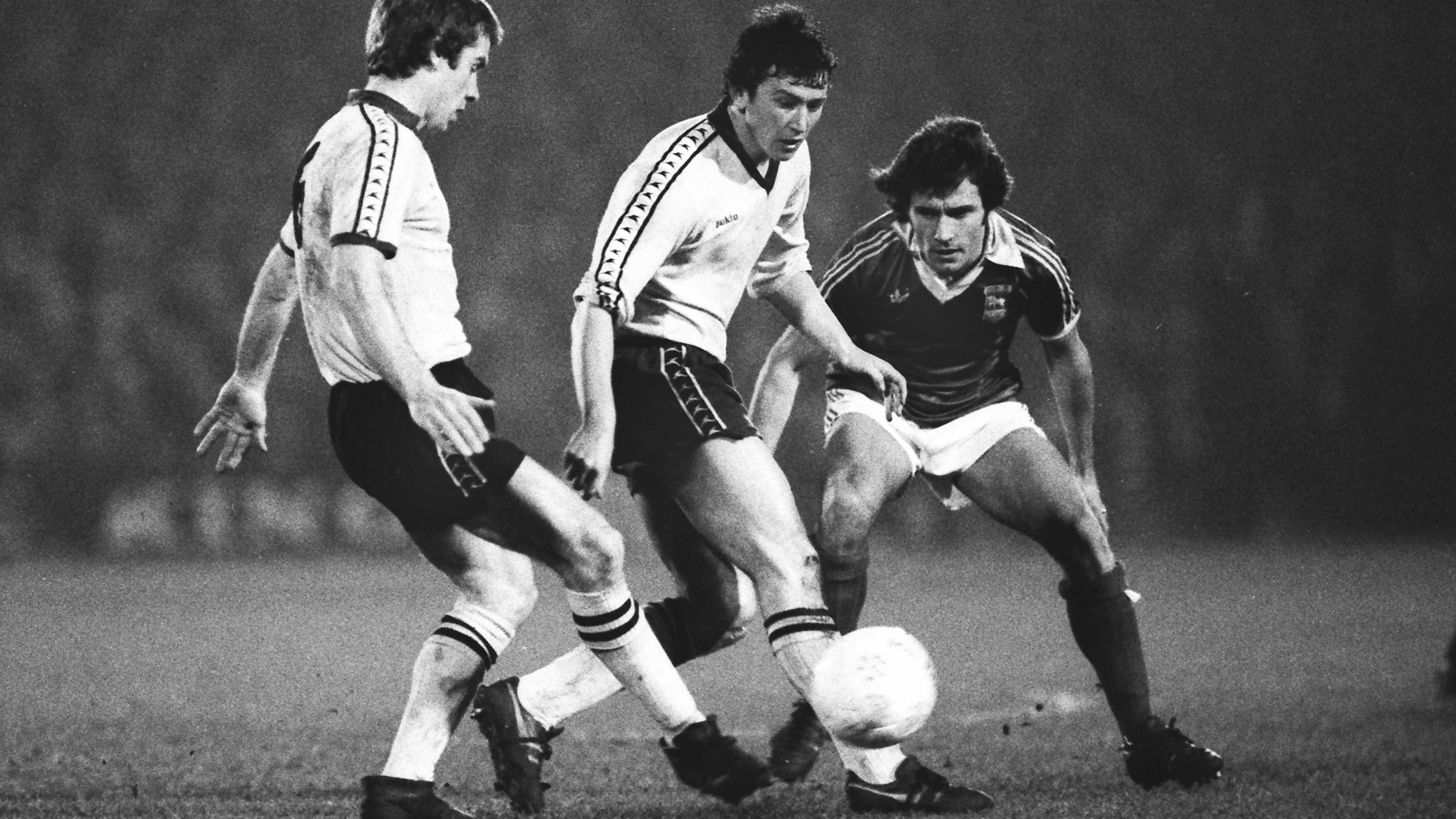 Image source, Rex Features
Pulis (centre) combines with Bristol Rovers team-mate Frankie Prince to take on Ipswich's Colin Viljoen in their FA Cup fifth-round replay in 1978
The FA Cup was seen as special when I was a boy, and also when I was a player. Most managers I played for would change our routine in cup weeks, but back then it did not involve resting the first team.
Instead, at Bristol Rovers, we'd have brine baths and a walk on the beach at Weston-super-Mare. We were told you couldn't buy that sea air in bottles!
My best run was with Rovers in 1978 when we got to the fifth round as a club from what is now the Championship and drew Ipswich, who had finished third in the top flight the season before.
They had a fantastic team at that time and in Sir Bobby Robson a brilliant manager. At home, on a rock-hard icy pitch at Eastville, we took them all the way and almost beat them. Bobby Gould scored a late winner that was disallowed for being offside, but was later shown not to be.
Ipswich were far too good for us in the replay and went on to win the FA Cup. That was the closest I got to winning it as a player, yet I always think of Gould's goal and how that could have changed the course of history.
I said at the start that I believe the FA Cup is the greatest cup competition in the world, and it is also definitely the most famous.
It has created so many legends down the years, and you don't need to have lifted the trophy to have become one of them.
Take Colin Addison, for example. I have been invited to be one of the speakers at his memorial service in early spring this year.
Colin played more than 400 league games and managed many more but, in almost 60 years in the professional game home and abroad, his defining moment was as player-manager of non-league Hereford United when they beat top-flight side Newcastle in the FA Cup third round in 1972.
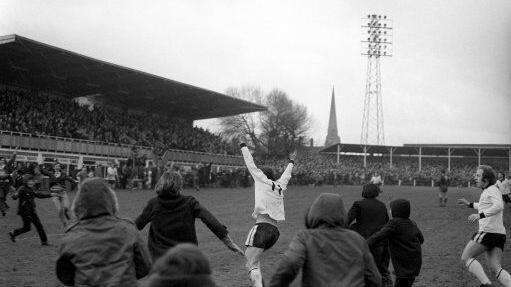 Image source, PA Media
Ronnie Radford is pursued by hundreds of fans as he celebrates scoring his iconic FA Cup goal for Hereford against Newcastle in 1972
More than 50 years later, when you watch live games or highlights programmes covering this weekend's ties you will still see footage in the build-up or of one of the competition's most iconic moments - Ronnie Radford's iconic strike in that game that travels all of 30 yards before it nestles in the top corner of the Newcastle net.
That goal sent shockwaves all the way back up to the north east and still remains one of the greatest stories in the incredible history of this special competition.
I'm hoping for more of those moments this weekend - and for new heroes to emerge.
Tony Pulis was speaking to BBC Sport's Chris Bevan.