
Last week, on a cold night in Glasgow, Celtic boss Martin O'Neill joined a very select club of managers who have been in charge for 1,000 professional games.
The League Managers Association (LMA) Hall of Fame 1,000 club is something I'm proud to be a member of too - there are only 40 of us, including Sir Alex Ferguson, Ron Atkinson, Jim Smith, Dave Bassett, Harry Redknapp, Graham Taylor, Brian Clough and Sam Allardyce.
It's getting harder to last that long, though. Far more managers are getting sacked, and more often, than there were when I started out, and for more than half of them, their first job is also their last.
According to the LMA, there have been 165 first-time managers since 1 January 2013, and to date 56% of them haven't got another manager's job.
In England now, the average time a manager is given at a club in the top four divisions of our men's game is one year and nine months, which is up from the end of the last season, when it was one year and four months, but is still crazy.
Gone are the days where you could get a job and think about building something - it seems to be more about survival now.
Longevity is highest in the Premier League, where the average time you get is more than two years, but it drops in the Football League - which is part of the reason why I'd definitely recommend that, given the opportunity, young coaches today should seriously look at jobs abroad, especially in Scandinavian countries for example, if they have the chance.
Martin, who turns 74 on Sunday, reached his milestone with Celtic, a club he adores, so it must have been something special.
I reached my 1,000th game with West Brom in 2016, and it came against my former club Stoke at the Britannia Stadium, as it was then. As I said at the time, you could not have scripted it better.
Like many managers of his generation who began lower down the pyramid, Martin started at the bottom of the ladder, in non-league.
It was looked on as good grounding and experience for managers who would go on to get jobs in our top division.
It was the same in Scotland too, where you would cut your teeth at smaller clubs before moving onwards and upwards - all of the names I mentioned earlier followed the same path, as did Bill Shankly and Howard Wilkinson. It was my route too, but so much is different today.
The advice I was given about how to stick around
 Image source, Getty Images
West Brom captain Darren Fletcher presented Pulis with a Ship's Decanter at the club's training ground to commemorate his 1,000th match as a manager, the day before they played his old club Stoke. The game finished 1-1
My first chance as a manager came with Bournemouth in the summer of 1992. At first I was not thinking much beyond my first game - a draw on Preston's plastic pitch by the way - and neither, it seems, was my chairman, Norman Hayward.
I'd been given a club car, which was about 20 years old and, a few months into my first season, we went up to watch Grimsby play one night.
We drove there in his Mercedes and on the way back he dropped me off where I'd parked up. The windscreen was iced up so I turned on my engine and Norman got out his credit card to try to scrape the ice off.
While he was doing that, I heard him shouting: "Oh no, I can't believe it!" I thought he had snapped his credit card but he'd actually seen my tax disc. "They've given you 12 months. I told them six months!"
I laughed and said: "Thanks Norman, that gives me loads of confidence!"
Still, I was fortunate to get the chance at Bournemouth, and also lucky in that I received some good advice on how I might stick around.
I always remember the late Alec Stock - another member of the 1,000 club, who had long spells in charge of Leyton Orient, QPR and Fulham as well as with Yeovil, Roma, Luton and Bournemouth - ringing me up one night and explaining why I should work on a three-year plan.
The first season, he said, was to assess the players, staff, and get to grips with all the other aspects of how the club is run.
The second season was to reset it, to get it working on and off the pitch and win all the battles to get things my own way for the third season which, according to Alec, was the season that everyone - supporters, directors and yourself - should see progress.
He also told me any manager would only ever be judged a success by producing a winning team.
During my time at Bournemouth, I learned how true that was - never mind how hard you worked or how much you did to protect your club financially, management was all about winning.
The secret of longevity - learning how to win
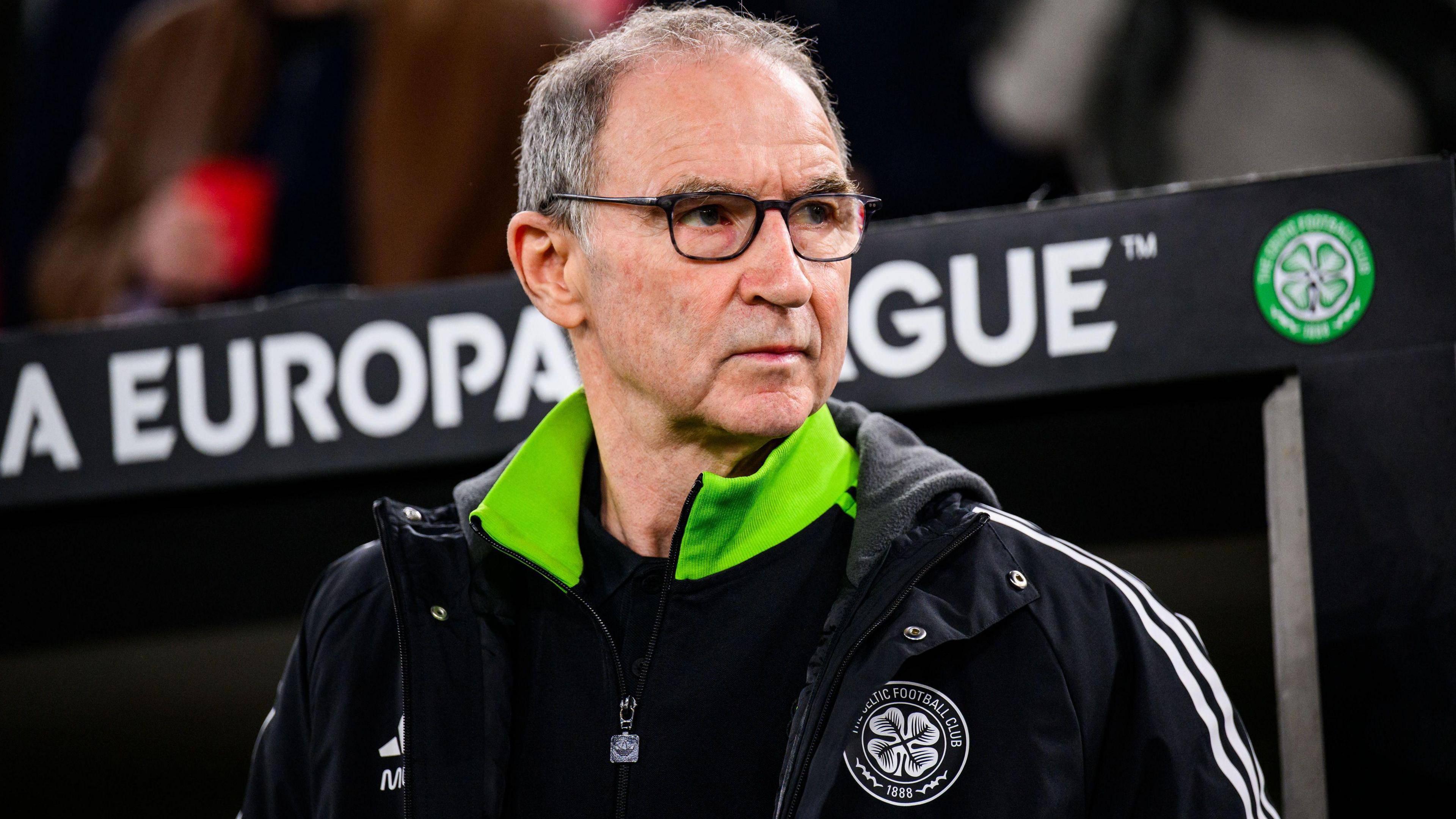 Image source, PA Media
O'Neill turns 74 on Sunday. In his 1,000th professional game as a manager, his Celtic side lost 4-1 at home to Stuttgart in the Europa League
At the end of my second season, a new chairman took over the club and I was on my way. So much for the three-year plan, but it was still a great two years of learning for me.
Norman was a hard chairman, but he was honest and we remain friends today. I was left more determined than ever to get back in the saddle and go again.
I was 34 when I got the Bournemouth job, which is very young for a manager but I learned the defining reason behind a long life in this new role - as Alec said, management is all about winning.
Irrespective of everything which surrounds the role - which has dramatically changed from my early days, by the way - if you don't win, then forget your philosophies because you won't be in a job for long.
Learning to win with different clubs and different players is a challenge but it was one I enjoyed.
Certain principles must be applied wherever you are and although your team's strengths can and do vary, those principles must stay rock solid.
Most young coaches today move on from academy football into professional football. Academy football is a teaching job, professional football is a winning job.
You only learn that when you get a professional job - but spaces are scarce for British managers in the Premier League, and they are dwindling in the Championship too.
Of the 44 clubs in England's top two divisions, there are only 21 British managers - 20 in permanent roles, plus Michael Carrick at Manchester United until the end of the season. That's the case even though our football associations deliver state-of-the-art coaching courses which are recognised as being as good, if not better, than in any other country worldwide.
Managers are seen more as coaches now
What's changed for British managers trying to get a job - or stay in one - is the rise of sporting directors, who have been appointed by mostly foreign owners.
As I've mentioned before in this column, both the Premier League and Championship also have enormous numbers of players from abroad and clubs know buying players from South America, Africa and Asia can be better value than the market at home.
So you have foreign owners and foreign directors of football - or even English directors of football working for foreign owners - who all see the value in appointing foreign coaches who have experience of working abroad, speaking different languages and understanding different cultures.
Because our top two leagues are so multicultural, the big agencies who have often provided assistance to the owners in buying the clubs and have helped guide their appointments too, have an almost direct line to the club's recruitment policies.
Recruitment is everything - if you can crack that side of things and bring good players to your club, then success will be forthcoming. Bournemouth, Brighton and Brentford have proved that.
My first season out of work after I'd been sacked by Bournemouth coincided with me being asked by Bruce Rioch to watch games for Bolton, who he was managing at the time.
That period taught me how important knowledge of players was because, after months spent travelling around the country, I was appointed Gillingham manager in 1995.
The knowledge I'd gained enabled me to bring in players that brought the club one of the most successful periods in its history.
Now, though, that side of things is taken care of by others. Managers are now more seen as coaches, expected to work with players recruited by the director of football, and sometimes without having any say in signings at all.
As I've mentioned above, there are certain teams whose recruitment has been fantastic, but there are also clubs who have experienced the complete opposite.
As a manager today, with players arriving from far-flung countries, it is impossible to watch all players live, yet I still would want and expect my club to have the decency to let me view the players they were advising we should sign.
Knowledge is vital for new managers
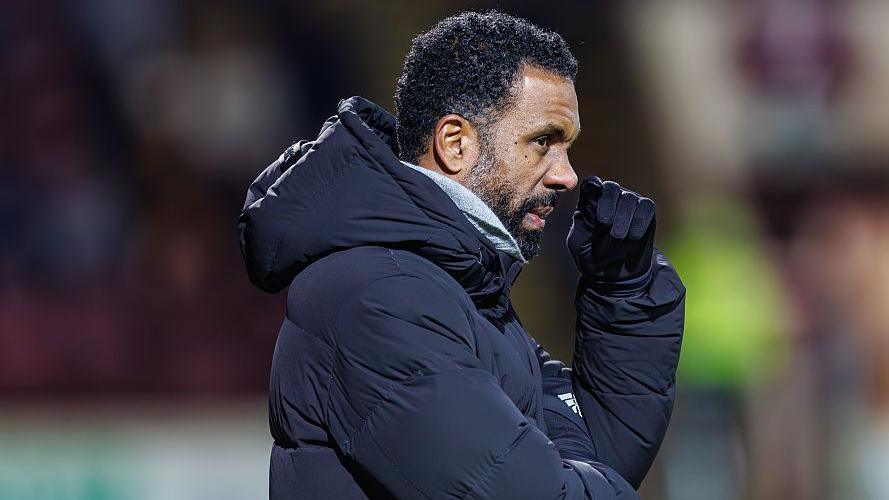 Image source, Getty Images
Wilfried Nancy was sacked by Celtic on 5 January after eight games in charge. His 33-day reign is the shortest in the club's history
Over the past few months, we've seen young coaches arrive from Europe and the United States to take charge of Southampton, West Brom and Celtic.
Will Still, Eric Ramsay and Wilfried Nancy were all sacked pretty quickly. All three had no experience of British football - yet they were left alone to manage in difficult circumstances. It makes me wonder: Who at each club made that decision?
A lot of directors of football have never experienced management, and until you have actually sat in that hot-seat yourself, you don't realise how difficult it is, or the pressure you put yourself under to succeed.
Someone with any knowledge of the game, who had done the job themselves, would have provided those young managers with an experienced football man to help them through the initial period at their new club. So why didn't it happen?
Martin, who had been in interim charge at Celtic before Nancy was appointed, is a great example of someone who could have helped.
There should have been a recognition by the director of football that while Nancy came in with a really strong record in Major League Soccer, that competition is very different to British football.
There couldn't have been a better fit of someone to help him settle in than Martin, who was already there. He's got the manager's job there again now, of course, but why wasn't he kept on anyway as a mentor when Nancy arrived?
Why go abroad? For patience and time
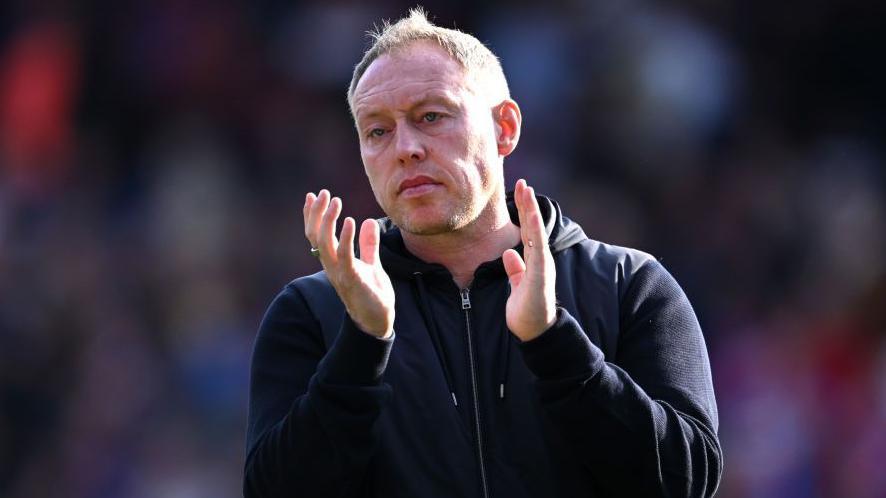 Image source, Getty Images
Former Nottingham Forest, Leicester and Swansea manager Steve Cooper was named head coach of Danish club Brondby in September 2025
Young coaches are often appointed on the proviso that their role is to prepare the team to win games. Recruitment is dealt with by other staff, as are the medical and sports science elements, which will determine the availability of your best players through a long hard season.
So much of the machinery which provides either a successful or unsuccessful season could be dictated by everyone apart from the coach. Yet if the team are unsuccessful, he will invariably take responsibility and get sacked.
In most of my career, I took full responsibility for all of the above and accepted the end product of the sack if it didn't work.
With such a small window given to managers and coaches to succeed today, it is not surprising that Steve Cooper turned down opportunities to manage again in the Championship after leaving Leicester and chose to go to Brondby in Denmark instead.
He believes more patience and time will be provided there for him to be successful, which is something you just don't get in England any more.
Tony Pulis was speaking to BBC Sport's Chris Bevan.